Visit the space at dusk
Look at the garden when you actually plan to enjoy it in the evening. Note which flowers remain visible and which areas disappear into shadow. A planting that is bright in afternoon sun may feel very different after sunset. Take photographs without automatically increasing their brightness, then compare them with your own impression. The aim is to understand the real view rather than create an image of a much lighter garden. Identify one area where a modest group of white flowers would be useful.
Give white a dark enough setting
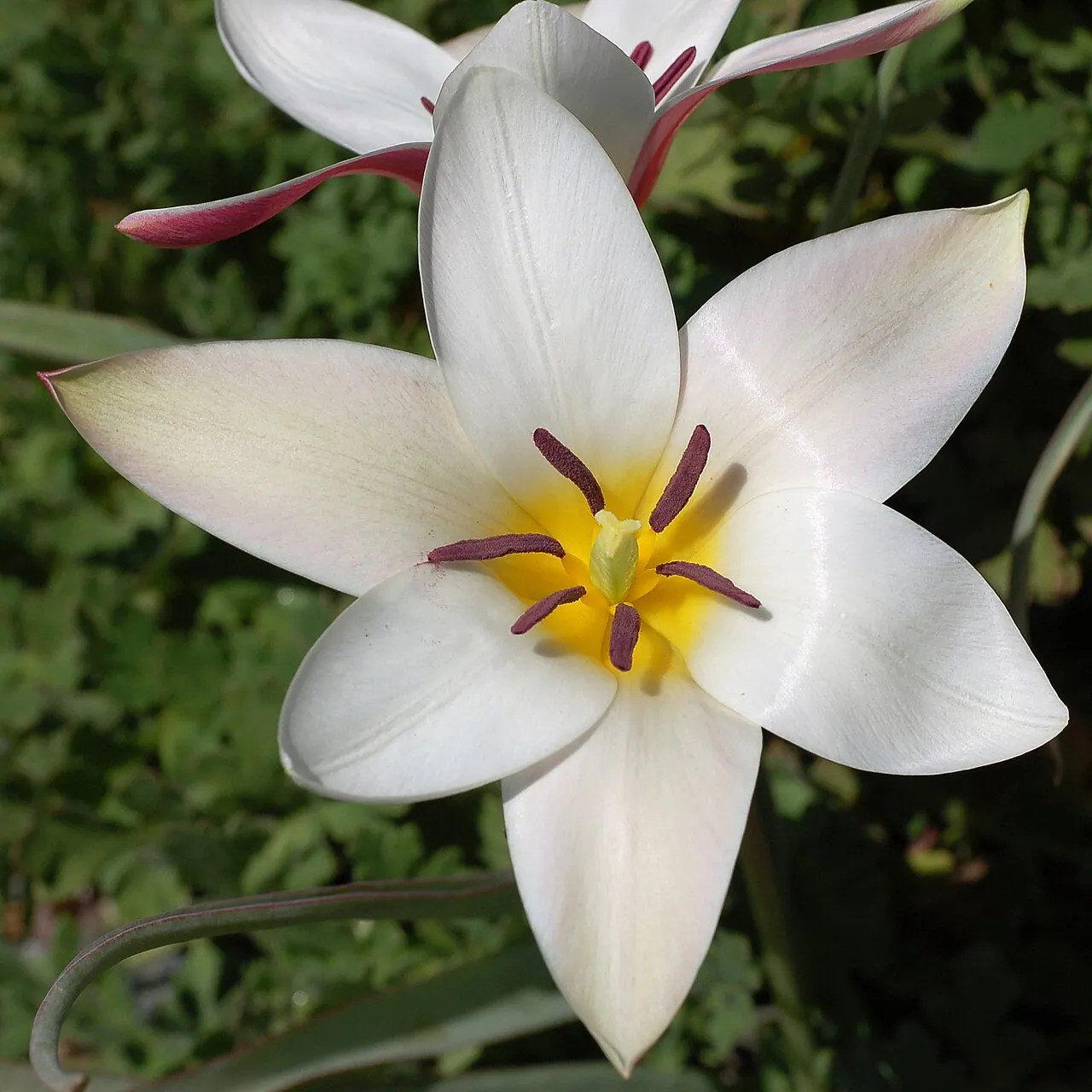
White blooms are easier to read when their outline contrasts with nearby foliage or another quiet background. Avoid placing every pale flower against a pale wall, where the shapes may merge. Use green leaves as part of the design rather than treating them as filler between flowers. Compare rounded clusters, open daisies and airy sprays to see which remain legible from the seat. A variety of flower forms can make a restrained palette interesting without requiring a large number of different colours.
Include more than one flowering period
Choose suitable plants with overlapping but different seasons, checking local flowering information. A white garden does not need to be at maximum bloom all year, but it should have a clear plan for its quiet intervals. Pale seedheads, interesting bark and enduring foliage can contribute when flowers are absent. Keep these features proportionate to the space; a tree selected for white bark still needs room for its adult canopy and roots. Add seasonal annuals only where their care and replacement fit the routine.
Use scent and lighting thoughtfully
If fragrance matters, select a correctly identified plant whose scent is noticeable at the hours you sit outside. Place it near enough to enjoy without overwhelming the seat. Avoid assuming every white flower is scented or suitable for the same site. Keep any necessary lighting directed and modest, preserving comfortable darkness elsewhere. Review the arrangement on several evenings through the season. The strongest composition may be a few clear pale shapes and good foliage, rather than an entirely white border that requires constant replacement to stay impressive.
A little further reading
Match these general notes to your plant variety, climate and local conditions.