Locate the usual viewpoint
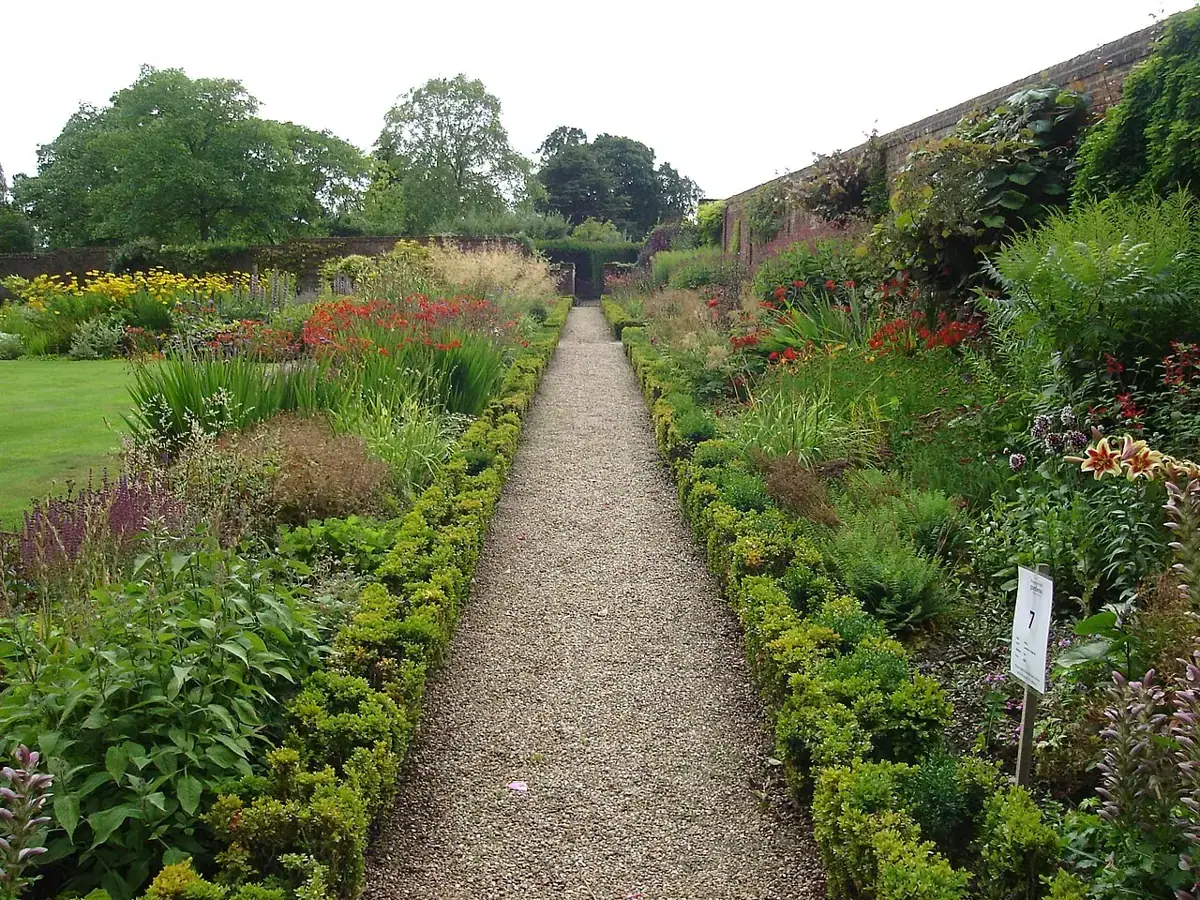
Stand where the border is most often seen and mark that position on a sketch. Height relationships change when viewed from a kitchen window, a low seat or a path beside the plants. Decide which direction should provide the clearest composition before arranging anything. A border seen from all sides needs a different structure from one against a fence. Use temporary stakes to represent mature heights so the plan accounts for future growth rather than the small size of new purchases.
Choose a background that earns its space
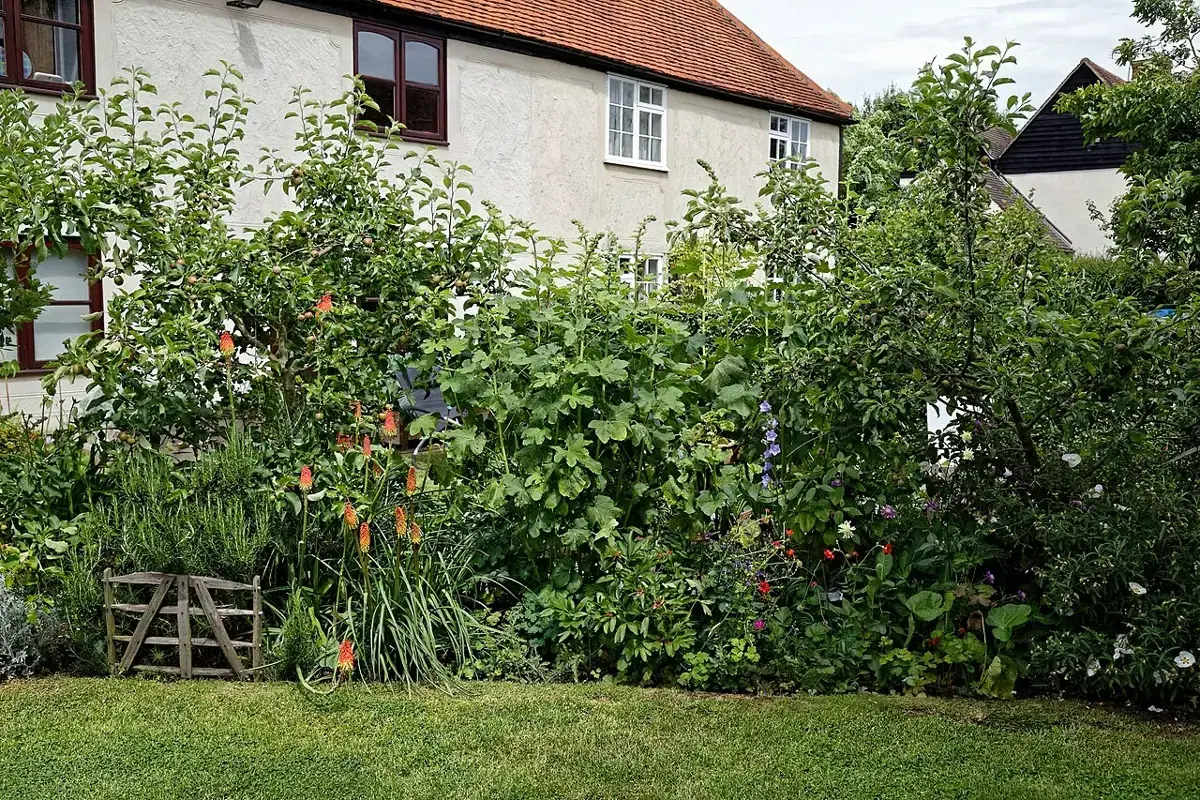
The rear layer provides a visual anchor, but it does not have to be a continuous wall of tall shrubs. One suitable upright plant or a modest group can establish the framework. Check mature width as carefully as height, especially in a shallow border. Leave access for pruning and avoid placing plants so close to a boundary that their roots sit in a persistent rain shadow. The background should support the composition without consuming all the light and growing space in front of it.
Let the middle carry the seasonal detail
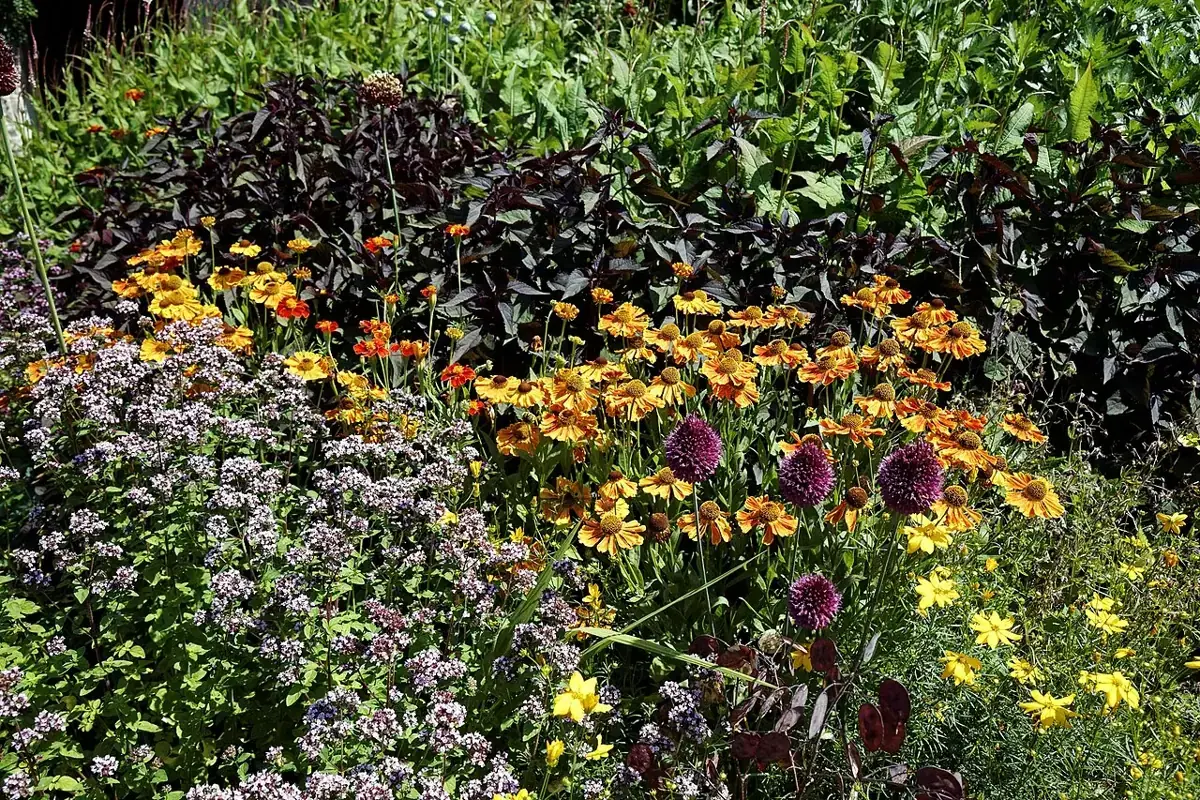
Use the middle layer for the main flowers or distinctive foliage. Arrange a few related groups rather than a line of individual specimens spaced like objects on a shelf. Allow some overlap in the view, but preserve enough physical space for each plant to grow. Choose contrasting leaf sizes or flower forms so the groups remain readable. Mark their flowering periods on the sketch to see whether the middle layer retains interest after its first impressive flush has passed.
Use the edge as an invitation
The front layer connects planting to the path or lawn. Select plants that soften the edge without constantly blocking movement, and leave occasional gaps where the deeper planting can be seen. A solid low hedge is not the only way to make a border look intentional. View the arrangement from the original marked position after planting and again at maturity. If the layers have merged into a dense wall, edit the strongest obstruction rather than adding another low plant in the hope of restoring depth.
A little further reading
Match these general notes to your plant variety, climate and local conditions.