Read the shape before cutting
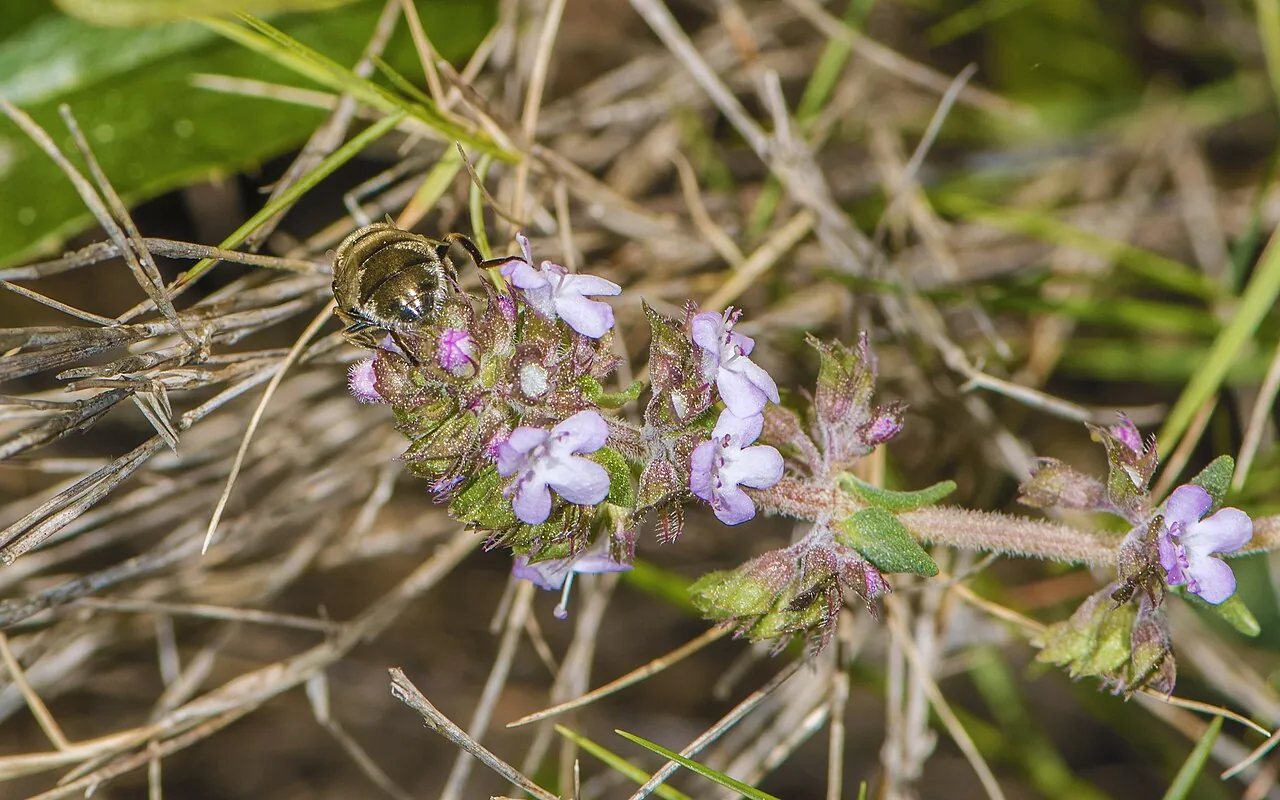
Identify whether your thyme forms an upright little shrub or a low spreading mat. Culinary harvesting is usually easier from the shrubby forms, but both can develop woody areas beneath their leaves. Part the foliage and find where green growth ends. That boundary matters more than the tidy outline you hope to create. A plant that appears leafy from above may have long bare stems underneath, so a deep uniform haircut can remove nearly every point capable of producing an easy recovery.
Pick useful tips around the plant
Use clean scissors to take small leafy sprigs from several positions. Leave a visible cushion of living foliage beneath each cut. Repeatedly harvesting the same convenient side can distort the plant and expose bare growth. Keep a small kitchen container beside you so cut stems are collected immediately rather than dropped into the crown. If you need a large quantity for drying, grow more than one plant and distribute the harvest. A compact thyme is not an unlimited supply of sprigs.
Trim with the growing season
Light shaping during suitable spring growth or after flowering can help maintain a dense plant. Timing should follow your climate and the plant's condition rather than a fixed date copied from another region. Let flowering sections finish if they are being used by pollinating insects, then remove spent growth without cutting deeply into old wood. Avoid trying to solve weak growth with rich feeding. First check sunlight, drainage and whether neighbouring plants are shading the thyme or holding moisture around it.
Replace decline before it becomes urgent
If the centre is largely bare and useful leaves sit only at the ends, consider propagating a replacement from healthy growth. Keep the old plant while the new one establishes, provided it is otherwise healthy. Photograph both from above to compare density and harvesting convenience. The younger plant can then take the prime position when ready. Renewal is often a more predictable use of time than a severe cut into an old woody framework, especially when you need a dependable herb close to the kitchen.
A little further reading
Match these general notes to your plant variety, climate and local conditions.