Choose a radish for the season
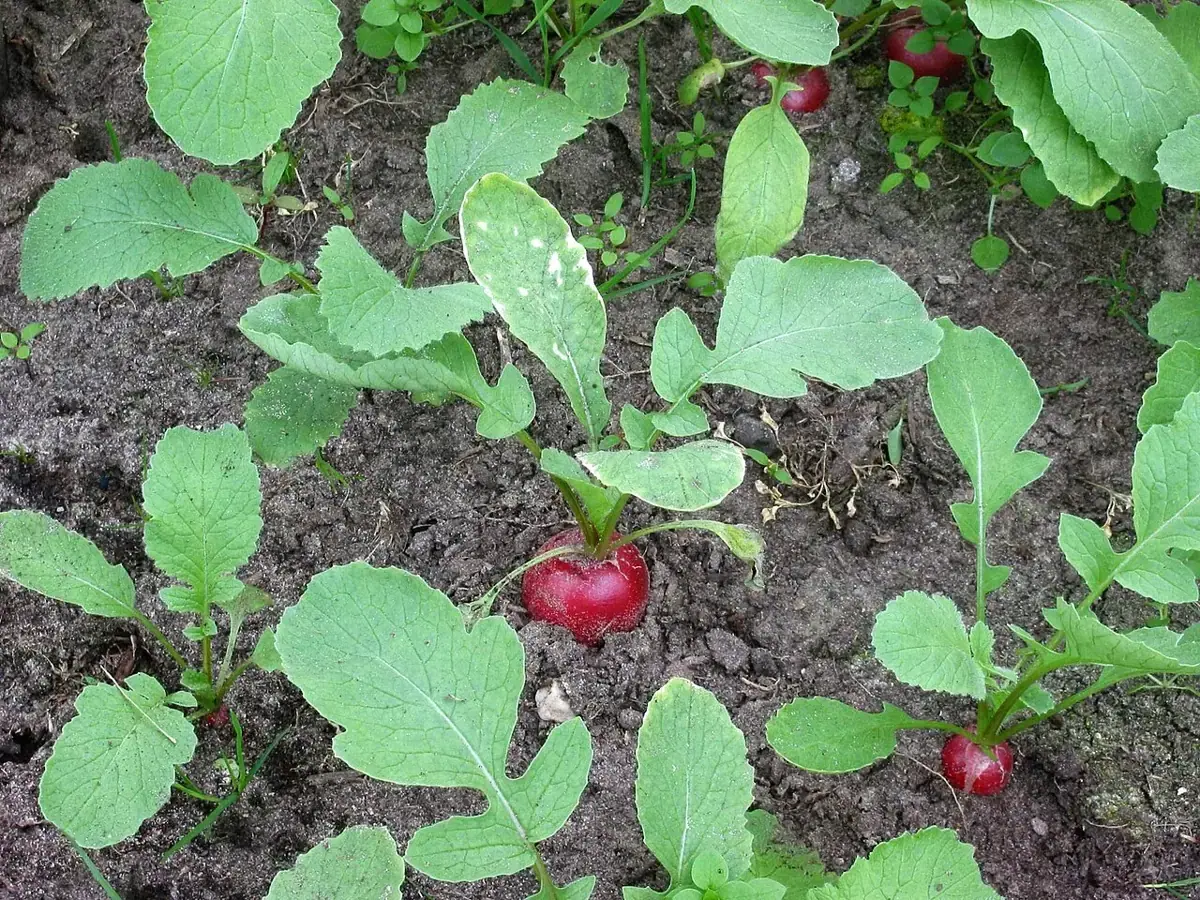
Small salad radishes and larger winter radishes follow different schedules. Read the packet before using a familiar sowing date, particularly when trying an unfamiliar long-rooted variety. Many salad types perform best in cooler growing periods, while heat can shorten the useful harvest window. Write the expected root shape and recommended season beside the sowing date. This avoids judging a long-rooted radish by the round red shoulder you were expecting or leaving a quick variety in the ground far too long.
Give every seedling room
Sow a short row or modest patch, then thin according to the variety's spacing guidance. A mass of leaves does not guarantee a useful crop of roots if the plants are competing closely. Water gently after thinning if the surface has been disturbed. Keep the seedbed reasonably even in moisture so growth is not repeatedly interrupted. Inspect the edge of the patch as well as the centre; a container's sunny side can dry much sooner and produce a very different result.
Pull a sample before the deadline
Use the packet's maturity estimate as a reminder to inspect, not as a promise that every root will be ready on one date. Gently expose a shoulder or pull one representative plant when it approaches the expected size. Slice and taste that sample before deciding to leave the rest. Tenderness matters more than maximum diameter. Record the harvest date and weather so that the next sowing can be checked at the right stage under similar conditions, rather than waiting for a photograph-worthy row.
Replace the row instead of preserving it
Once roots become woody, pithy or unappealing, extra watering will not reliably return them to their earlier quality. Clear the finished crop and use the space for a planned next sowing or another suitable vegetable. Keep batches small enough to eat within their useful window. If several sowings fail during hot weather, pause and try again in a more favourable season rather than repeating the same conditions. A dependable sequence includes knowing when a fast crop has finished and when the garden needs a different choice.
A little further reading
Match these general notes to your plant variety, climate and local conditions.