Confirm the coating belongs to a disease
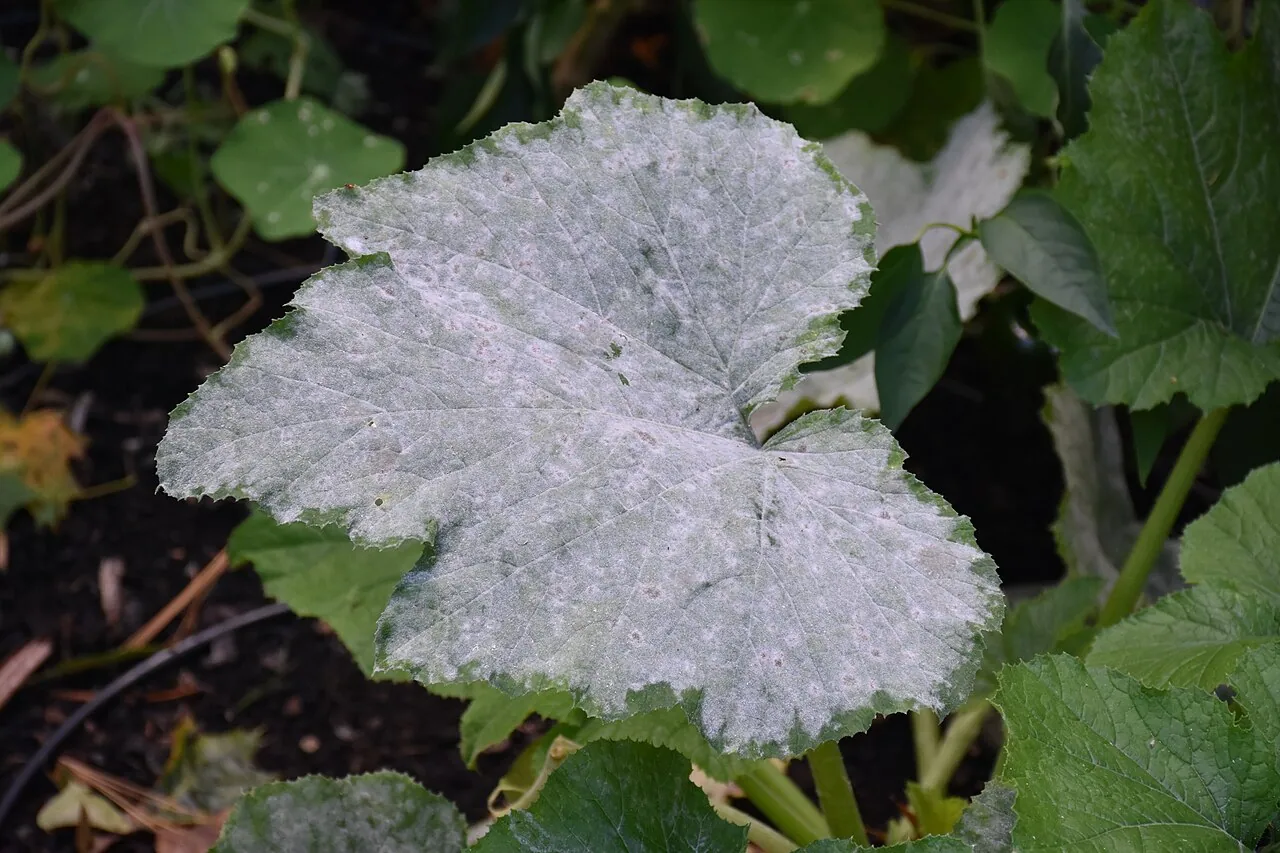
Powdery mildew often appears as pale powdery patches on leaves, stems or flowers, but dust, spray residue and natural leaf markings can look similar. Check several affected parts and compare them with a reliable guide for the host plant. Note whether the patches spread and whether growth becomes distorted. Keep a photograph of the whole plant as well as the coating. Powdery mildews are a group of fungi with differing host ranges, so one affected plant does not mean every unrelated species nearby faces the same infection.
Look beyond the visible surface
Assess how closely plants are packed and whether leaves remain crowded against a wall or neighbouring canopy. Suitable spacing and airflow can help the overall growing environment. Also inspect moisture around the roots; drought stress can contribute to susceptibility in some plants. Do not assume the answer is to keep all foliage permanently dry or to spray it constantly. Powdery mildew biology differs from diseases that require wet leaves, so use host-specific advice rather than applying one general rule to every fungal-looking problem.
Remove material selectively
Where practical, remove badly affected growth according to guidance for the plant, collecting it rather than scattering it through the bed. Avoid stripping so much foliage that the plant is left unable to support itself. Clean tools when moving between affected and healthy plants. If the problem occurs repeatedly, consider whether a less susceptible cultivar would suit the location. Any control product should be appropriate to the plant, disease and local permissions, used at its labelled rate rather than combined with untested household recipes.
Compare new leaves over time
Mark the date of the first observation and any change made to watering, spacing or treatment. Old marked leaves may remain visibly damaged even when the situation improves. Look for the condition of fresh growth and whether new patches continue to appear. Record the part of the season when the problem is most noticeable. This helps distinguish a late-season cosmetic issue from repeated early damage that seriously limits growth, allowing next year's plant choice and maintenance to respond to the actual effect on the garden.
A little further reading
Match these general notes to your plant variety, climate and local conditions.