Locate the leaf in the plant's life
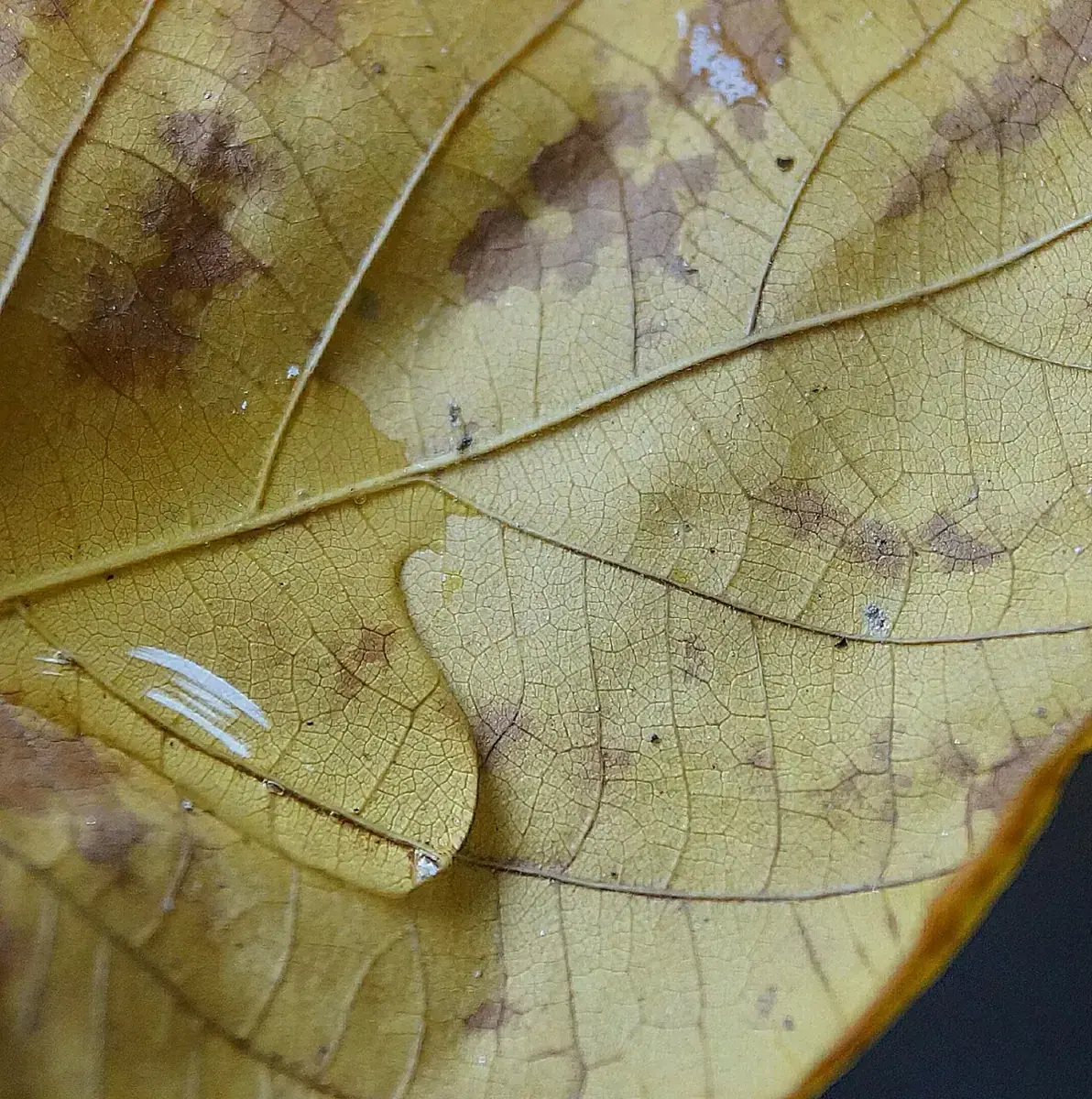
An occasional old lower leaf can yellow as part of normal ageing. Yellowing that spreads quickly through new growth deserves a different level of attention. Note whether the affected leaves are old or young, shaded or exposed, and on one side or throughout the plant. Photograph the whole plant as well as the leaf. The larger pattern often contains more useful information than a close-up alone, particularly when distinguishing ordinary turnover from a developing cultural problem.
Check water without assuming the answer
Both overly dry and persistently wet roots can be associated with yellowing. Feel the growing medium below the surface and inspect whether water has collected in an outer pot. Review the most recent watering rather than relying on a fixed schedule. If the plant was repotted recently, consider whether the larger volume is drying more slowly. Do not add water simply because the leaf looks unhappy. Establish what is happening around the roots before choosing a response that could worsen the opposite condition.
Review recent changes and visible evidence
Ask whether the plant moved, experienced a cold draught, received stronger sun or was fed differently. Inspect leaf undersides and stem joints for pests. Note whether veins and surrounding tissue change together or whether spots and damaged edges accompany the yellowing. These details can guide further research, but a visual pattern is not always enough to identify a precise nutrient deficiency. Avoid buying several corrective products at once. If uncertainty remains, seek plant-specific advice with the photographs and growing history you have collected.
Change one justified factor and follow new growth
Correct the clearest problem, such as trapped water or an unsuitable position, then allow time to observe the response. Already yellowed tissue may not return to green, so judge progress by the condition of remaining and newly developing leaves. Mark the date and count further affected leaves if the change is spreading. Remove fully spent foliage appropriately, but do not strip the plant to make it look instantly recovered. A measured comparison gives more reliable information than repeated treatment whenever the same damaged leaf catches your eye.
A little further reading
Match these general notes to your plant variety, climate and local conditions.