Read the width as carefully as the height
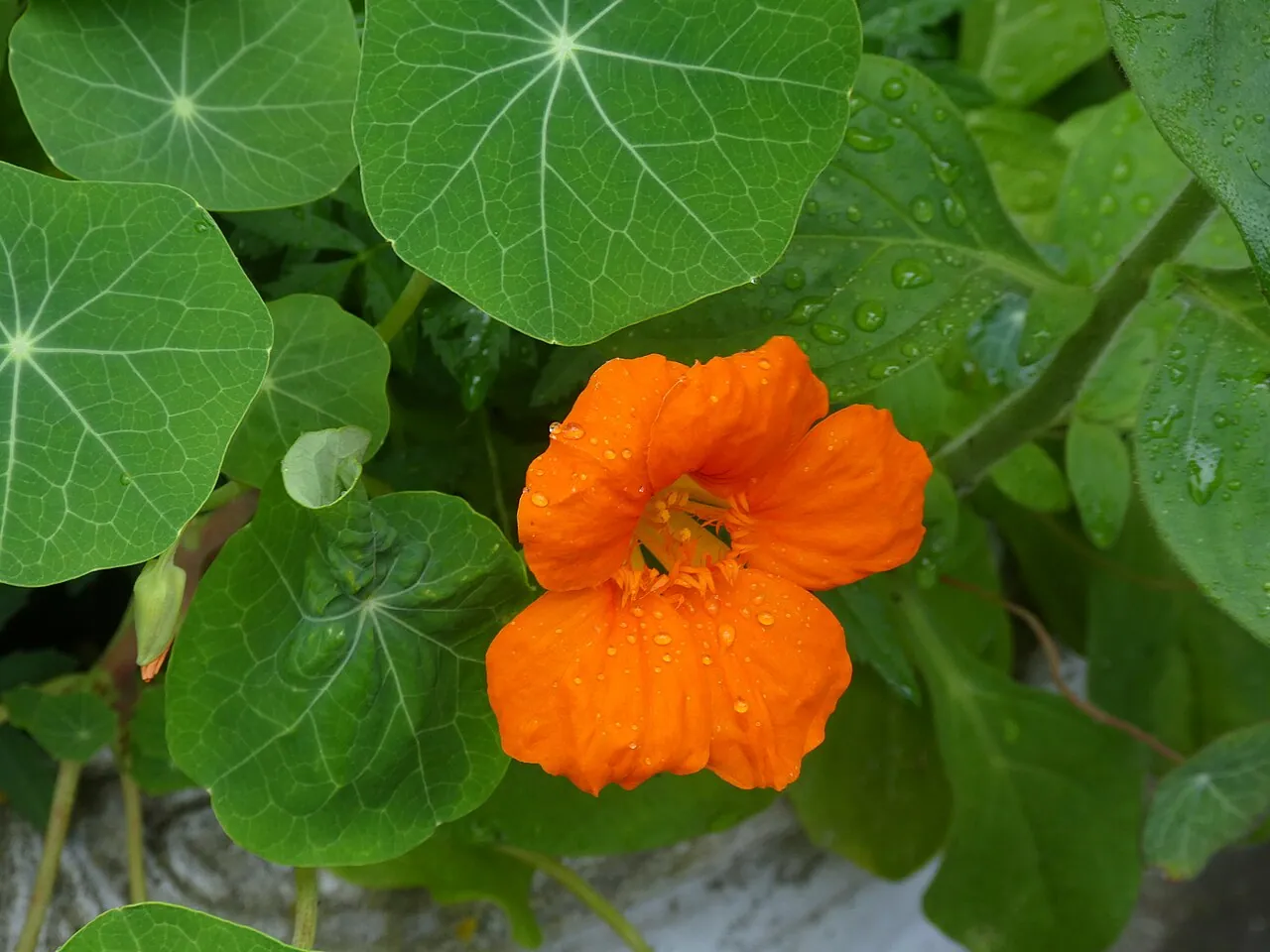
Nasturtium packets may describe a plant as compact while still allowing a generous spread. Bush forms suit an edge or a broad container; climbing forms need somewhere for long stems to go. Measure the available surface rather than counting only planting holes. If the plant will trail over a wall, look below it for a doorway, drain or regularly used path. The most attractive cascade is one that can grow freely without needing to be pushed aside every time someone passes.
Direct the first stems
Place young plants where you can reach the growing tips. As stems lengthen, guide them toward a trellis, across an intended patch of soil or over the chosen rim. A few early adjustments are easier than untangling an established mat of delicate stems. Keep the centre of neighbouring plants visible so the nasturtium does not quietly cover a slower-growing companion. If a stem reaches the wrong place, redirect it before it wraps through another plant's branches.
Resist the temptation to feed for colour
Nasturtiums grow well in relatively modest soil, and excessive fertilising can favour foliage at the expense of flowers. If leaves are plentiful but the display is sparse, review light and feeding before adding more nutrients. In hot climates, some afternoon protection may help, but deep shade can also reduce the desired effect. Water container plants according to the moisture in their root ball; a drought-tolerant reputation does not mean a crowded hanging pot can be ignored through prolonged hot weather.
Edit the outline without stripping the plant
Trim selected overlong stems at a sensible junction, leaving a coherent shape rather than a straight clipped edge. Inspect leaf undersides while working, as aphids can gather unnoticed beneath the parasol-like leaves. Decide whether self-sown seedlings would be welcome next year and remove developing seed accordingly. For a useful record, photograph the patch from the path at the same distance each month. If the plant repeatedly crosses the same boundary, next year's solution may be a smaller habit or a better position, rather than increasingly frequent trimming.
A little further reading
Match these general notes to your plant variety, climate and local conditions.