Decide what repeatable means
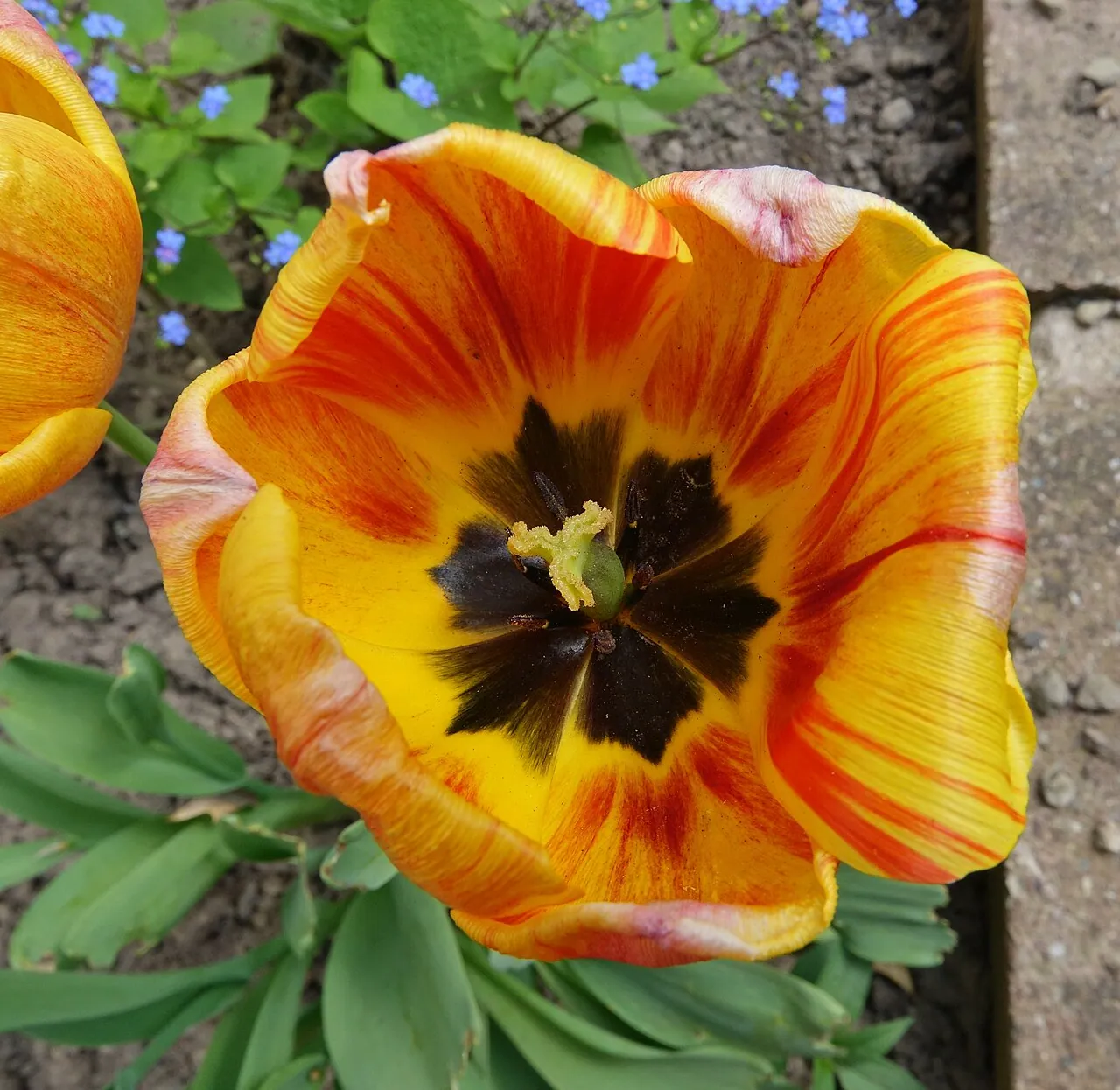
There are two sensible ways to repeat a tulip display. One is to plant fresh bulbs for a planned spring effect; the other is to choose suitable types and encourage them to return. Many border tulips give their strongest show in the first year, while some species and selected cultivars persist better. Make this distinction before ordering. A design that depends on an identical number of large flowers every spring needs a different budget and approach from a naturalising experiment.
Give a small trial its own label
Try a limited group of one named selection in a position matched to its requirements. Record the number planted and mark the area where bulbs will become invisible later. A sunny, well-drained site is suitable for many tulips, but specialist species differ, so consult the particular plant's guidance. Keep the trial separate from a mixed bargain bag. If colours and forms are jumbled, it becomes difficult to know which plants returned and which quietly disappeared.
Plan for leaves after the show
Leave green foliage to complete its work after flowers fade. Do not braid, tie or remove it merely to clear the view. Instead, plan neighbouring plants that develop later without immediately smothering the leaves. Photograph the bed during this less glamorous stage; it reveals whether the design has somewhere for bulb foliage to belong. Remove spent flower heads if seed is not wanted, and avoid repeatedly digging around the dormant bulbs when adding summer plants.
Count a second spring honestly
Count flowering stems and leafy non-flowering growth separately. A bulb that survives without flowering has not delivered the same display, but it may still be worth observing. Note shade changes, summer irrigation and any disturbance to the area before blaming the cultivar. After several seasons, keep the selections that perform in your conditions and simplify the rest. A repeatable display can include reliable returning groups alongside a small number of fresh bulbs, provided the plan makes that distinction clear from the start.
A little further reading
Match these general notes to your plant variety, climate and local conditions.