Separate the flower from the foliage
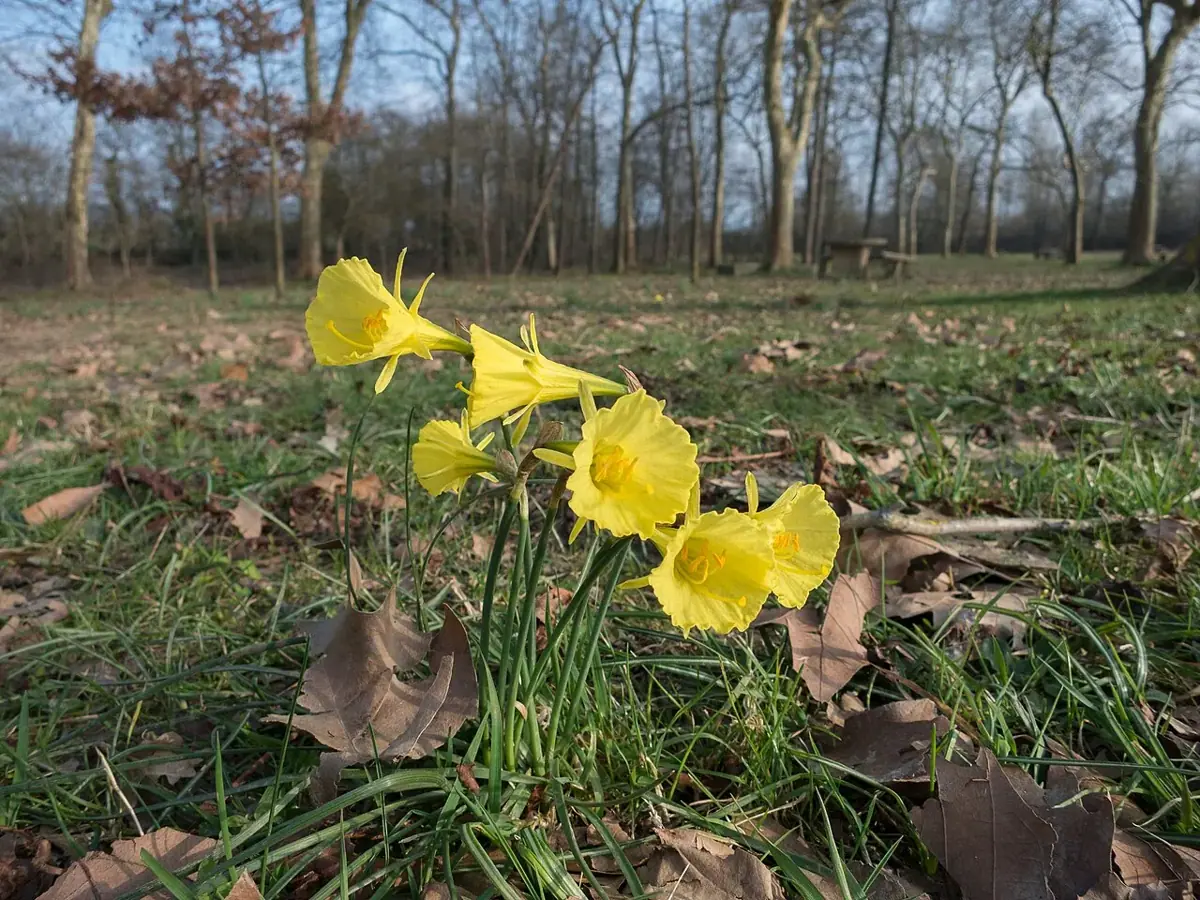
When a daffodil flower finishes, remove the spent head if seed is not needed. Leave the stem and leaves while they remain green, allowing the bulb to rebuild its reserves. Cutting everything down together gives an instantly tidy patch at the expense of the plant's recovery period. Work through the clump carefully so neighbouring unopened buds are not removed by mistake. This matters particularly where early and late varieties were planted close together and finish at different times.
Let leaves occupy their full length
Do not knot or fold daffodil foliage into a compact bundle. The leaves need their surface exposed to light, and a tight knot is primarily a visual convenience for the gardener. In a border, let later-growing companions soften the view without burying the clump. In grass, mark a temporary no-mow area until the foliage has yellowed naturally. A curved mown edge around the patch can make this temporary arrangement look intentional while retaining a practical walking route.
Investigate leaves without flowers
A leafy clump that produces few blooms deserves a closer history. Was the foliage cut early last year? Has shade increased? Are bulbs tightly crowded, or were they planted too shallowly? Write down those possibilities before applying feed indiscriminately. Mark the clump while its location is obvious so it can be assessed or divided at an appropriate time. Keep track of the named variety if known, since flowering time and mature size can differ substantially between daffodils.
Design the handover in place
Take two photographs: one at peak flowering and another when the foliage is fading. Compare the same view from the path. If the second image exposes an awkward empty foreground, choose a companion whose growth arrives at the useful moment rather than squeezing in plants immediately. Leave room around the bulbs for routine care and avoid cutting through them when planting. The goal is a border that accommodates the daffodil's whole cycle, so next spring's display is supported by what happens after this spring's flowers have gone.
A little further reading
Match these general notes to your plant variety, climate and local conditions.