Look below the name on the bag
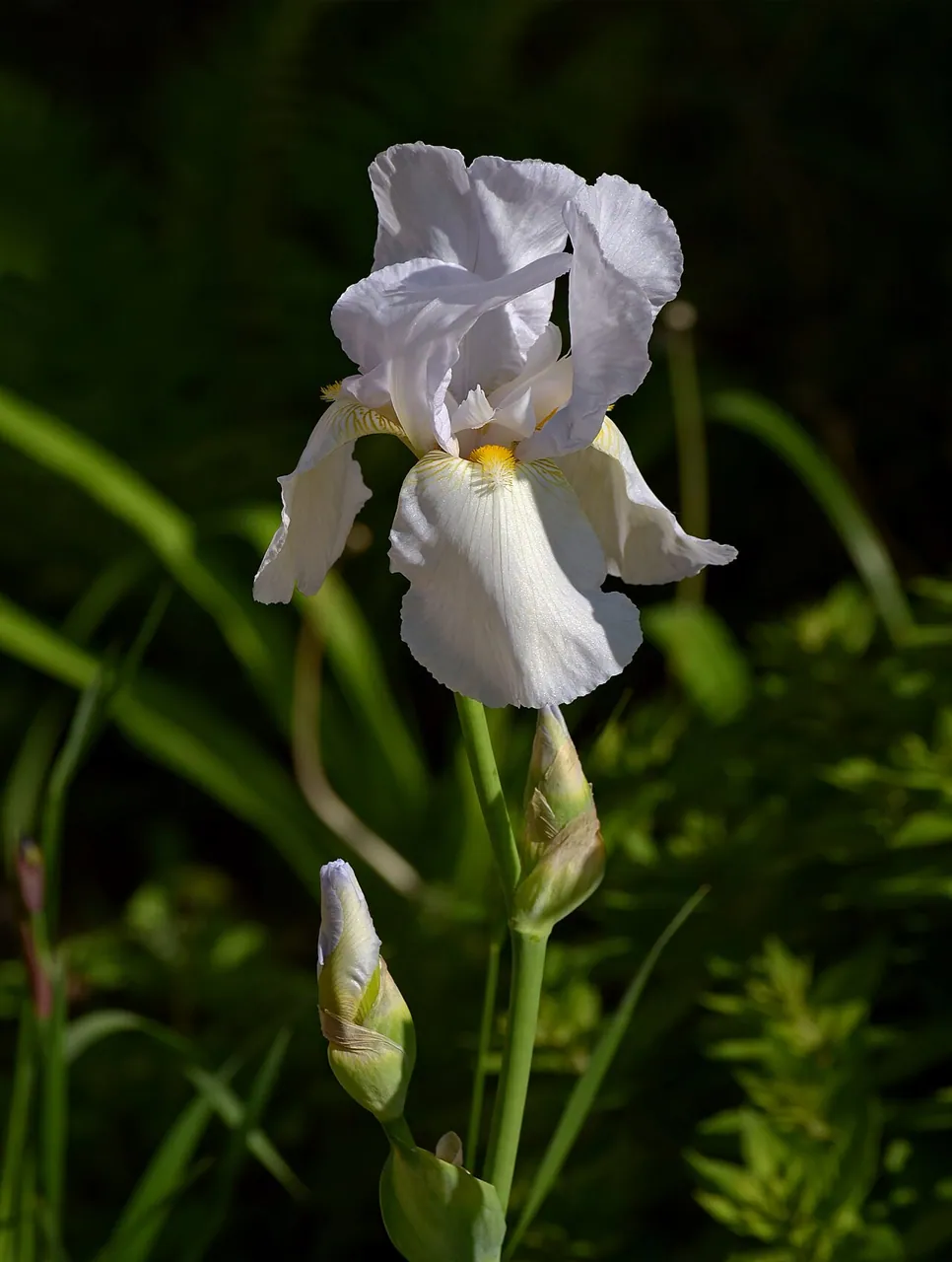
The word iris covers plants with quite different underground structures and moisture preferences. Bearded irises have thick rhizomes that spread near the surface. Dutch and some small spring irises grow from bulbs. Siberian and other irises form different kinds of clumps, and some species tolerate much wetter conditions. Keep the full plant name when buying. If the label only says mixed iris, obtain more information before applying instructions intended for a completely different group.
Give bearded rhizomes light and air
For bearded iris, plant the rhizome at soil level or only lightly covered, with roots arranged below it. Choose a sunny, well-drained position and avoid burying the rhizome beneath damp mulch. The growing fan should have space to expand rather than facing directly into a neighbouring clump. A photograph immediately after planting is useful because later top-dressing can quietly alter the depth. Check the surface after heavy rain to see whether soil has washed over the rhizome.
Follow the direction of new growth
As a bearded iris clump expands, flowering may become concentrated around its outer portions while the centre ages. Mark vigorous fans and plan division at a suitable time after flowering for your climate. Lift carefully and retain healthy sections with viable fans and roots, discarding soft or diseased material. Do not assume every old piece needs to be replanted. Arrange divisions with room for their future direction of growth, and label colours before separate clumps become indistinguishable outside the flowering season.
Build a care note for each group
Create a short note containing the iris name, underground structure, planting depth and preferred moisture conditions. Keep separate notes for bearded, bulbous and moisture-loving irises rather than one universal iris card. When a plant struggles, compare its actual conditions with that note. Yellowing leaves in a dry-loving bearded iris after prolonged saturation call for a different investigation from a thirsty iris adapted to damp soil. This distinction is more valuable than memorising a single watering frequency for every plant with the same common name.
A little further reading
Match these general notes to your plant variety, climate and local conditions.