Find the missing sunshine
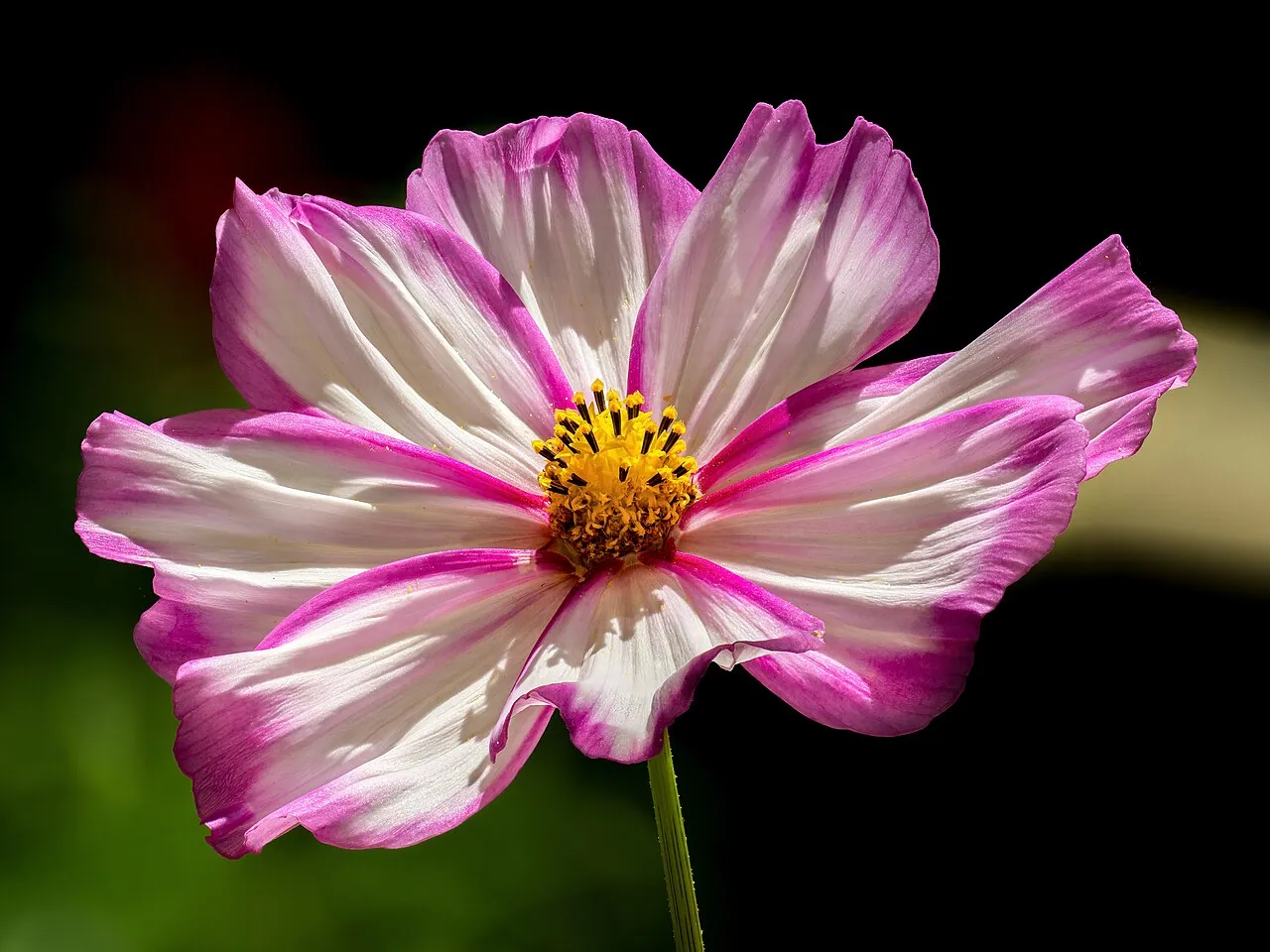
Cosmos with long gaps between leaves may be responding to insufficient light. Watch the bed at several points during a clear day rather than judging it at noon. A fence or neighbouring shrub can remove much of the useful morning or afternoon sun. Compare the plant with another cosmos growing in a more open position, if available. Do not diagnose every tall stem as a problem: some varieties naturally reach well above the shorter bedding selections.
Build support around a young plant
Choose a support that allows branches to spread while preventing the whole plant from tipping. A few unobtrusive stakes linked with soft twine can work for a small group. Set them beyond the crown and raise the twine as growth develops. Avoid gathering every stem into a tight bundle, which produces a pinched outline and hides weak stems. Check ties after windy weather; a support should steady the plant without rubbing a narrow groove into its main stem.
Read growth before adding feed
Ordinary, reasonably draining garden soil is usually a better starting point than a heavily enriched pocket. If the plant already has abundant soft foliage, another dose of fertiliser is not the first useful response. Check the light, spacing and recent watering instead. When a young plant is being pinched to encourage branching, remove only the growing tip above healthy leaves. Expect this to alter the shape and timing of flowering; it is a choice, not a rescue for every weak specimen.
Keep a clear picking route
Follow a faded flower down its stem before cutting. Fresh round buds and spent seed-forming heads can be surprisingly easy to confuse in a dense plant. Removing finished flowers encourages the display to continue, while a few marked heads can be retained for seed later. Walk around the clump weekly and note which side leans first. That observation may reveal a wind corridor, one-sided shade or competition from a neighbour, giving you a more useful adjustment for next season than simply buying stronger stakes.
A little further reading
Match these general notes to your plant variety, climate and local conditions.