Start with the people and the position
Choose a site that can be maintained safely and consider children, visitors and pets from the beginning. Even a small water feature needs an appropriate safety plan. Look at sunlight, nearby leaf fall and how water will be added or removed. Avoid selecting a place solely because it fills an awkward gap. You need room to inspect the edge and manage plants without balancing over the water. A container pond also needs a surface capable of supporting its substantial filled weight.
Make entry and exit part of the design
Wildlife needs ways to reach and leave the water. Include suitable shallow areas, gently sloping edges or stable ramps, depending on the pond type. Check how these work when the water level changes. A steep decorative container may need both an outside approach and an inside exit. Use materials that stay secure rather than relying on loose stones that can shift. Keep the arrangement simple enough to inspect, and do not assume an attractive edge automatically provides usable access.
Choose plants for the actual scale
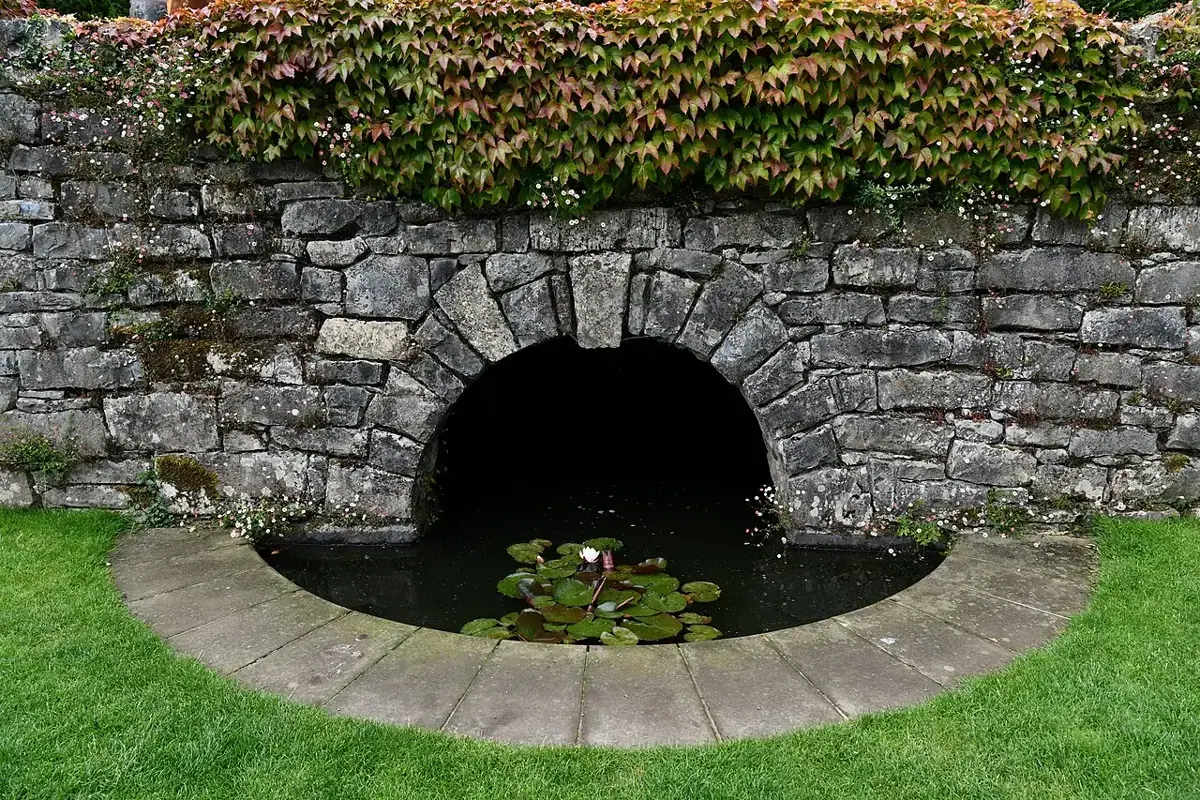
Select locally appropriate aquatic plants whose mature size suits the pond. Check species identities and avoid invasive plants. Consider the planting depth each requires rather than placing all baskets at the same level. Start with a manageable number and allow for growth. Do not add wild-collected animals or plants to speed up colonisation. Give visitors an opportunity to arrive naturally, and learn what already appears before trying to make the pond resemble a larger established habitat immediately.
Keep maintenance gentle and planned
Observe water levels, plant growth and accumulated debris. Follow reliable pond guidance for necessary clearing and seasonal work, avoiding wholesale disturbance without a reason. Keep a record of changes and photographs from the same viewpoint. A new pond often changes as plants establish, so a temporary appearance is not always a problem needing immediate correction. The most successful small pond is one whose safety, access and care remain practical long after the initial planting day.
A little further reading
Match these general notes to your plant variety, climate and local conditions.