Sort by growing conditions
Lay out the herbs in their nursery pots and read each label before planting. Rosemary, thyme and common sage generally suit sunny, freely draining conditions; mint and parsley need a different watering approach. Basil also brings a requirement for warmth that hardy perennial herbs do not share. These differences matter more than whether the leaves look attractive together. Make a short list of the light, moisture and seasonal protection each plant requires, then group plants with the closest practical needs.
Allow for the adult plant
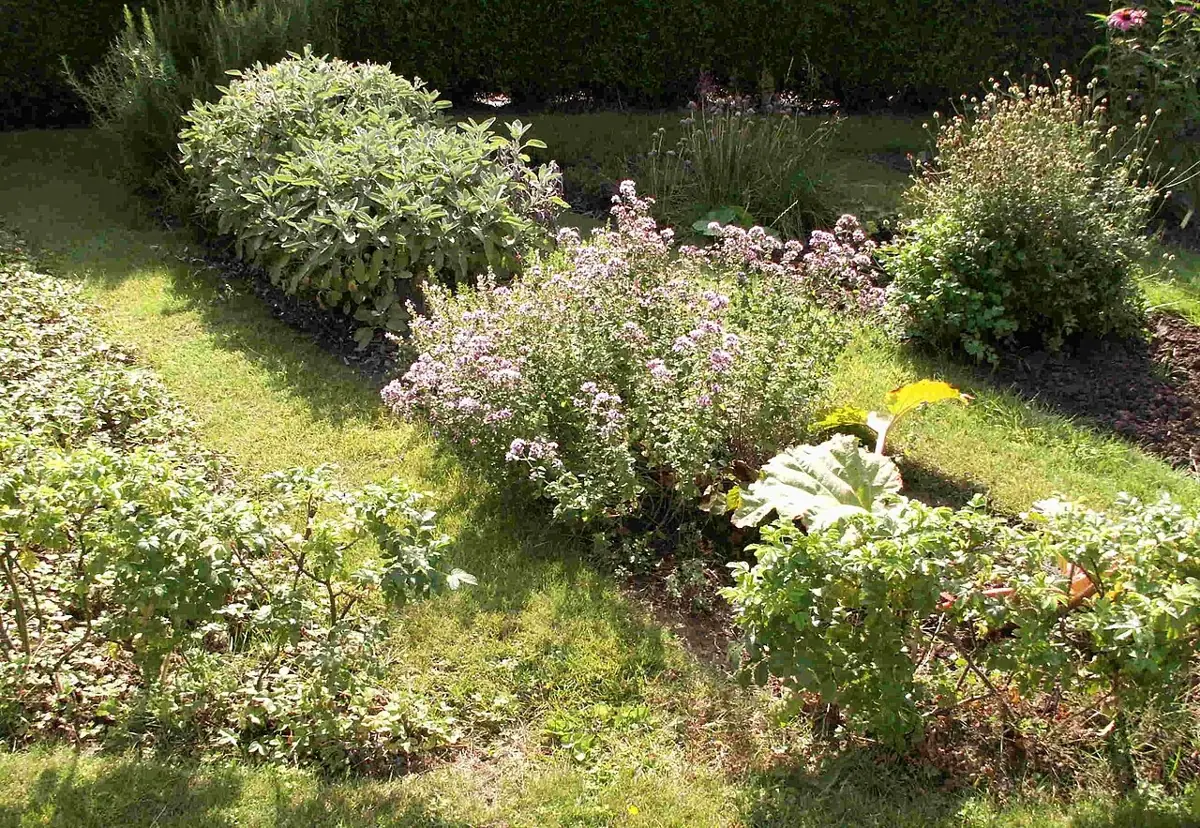
A young rosemary can look like a modest upright accent, while mint appears to be a harmless handful of stems. Their future size and spreading behaviour tell another story. Sketch the container from above and draw the expected spread rather than the nursery-pot diameter. Keep vigorous spreaders separate when they will crowd slower companions. If the planting needs constant cutting simply to let neighbouring plants receive light, it may be a grouping problem rather than a failure to harvest often enough.
Design around what you cook
List the herbs you use weekly and those you only need occasionally. A large, attractive pot full of rarely used plants can be less satisfying than two manageable containers of useful leaves. Place the most frequently harvested herbs where reaching them does not crush another plant. Keep labels visible until identification is certain, particularly when growing several similar varieties. A kitchen-facing arrangement can be attractive without forcing every ingredient into the same root environment or the same feeding schedule.
Let separate pots form one picture
Several individual containers can share a tray or stand while retaining separate care. Use a repeated pot material or a restrained arrangement to make the group feel coherent. Avoid a tray that holds all the pots in standing water after rain. Observe each herb for a few weeks before deciding whether it belongs permanently with its neighbours. When one plant repeatedly needs water much sooner than the others, move it into a more suitable group instead of compromising the entire collection's care.
A little further reading
Match these general notes to your plant variety, climate and local conditions.