Confirm the plant and its framework
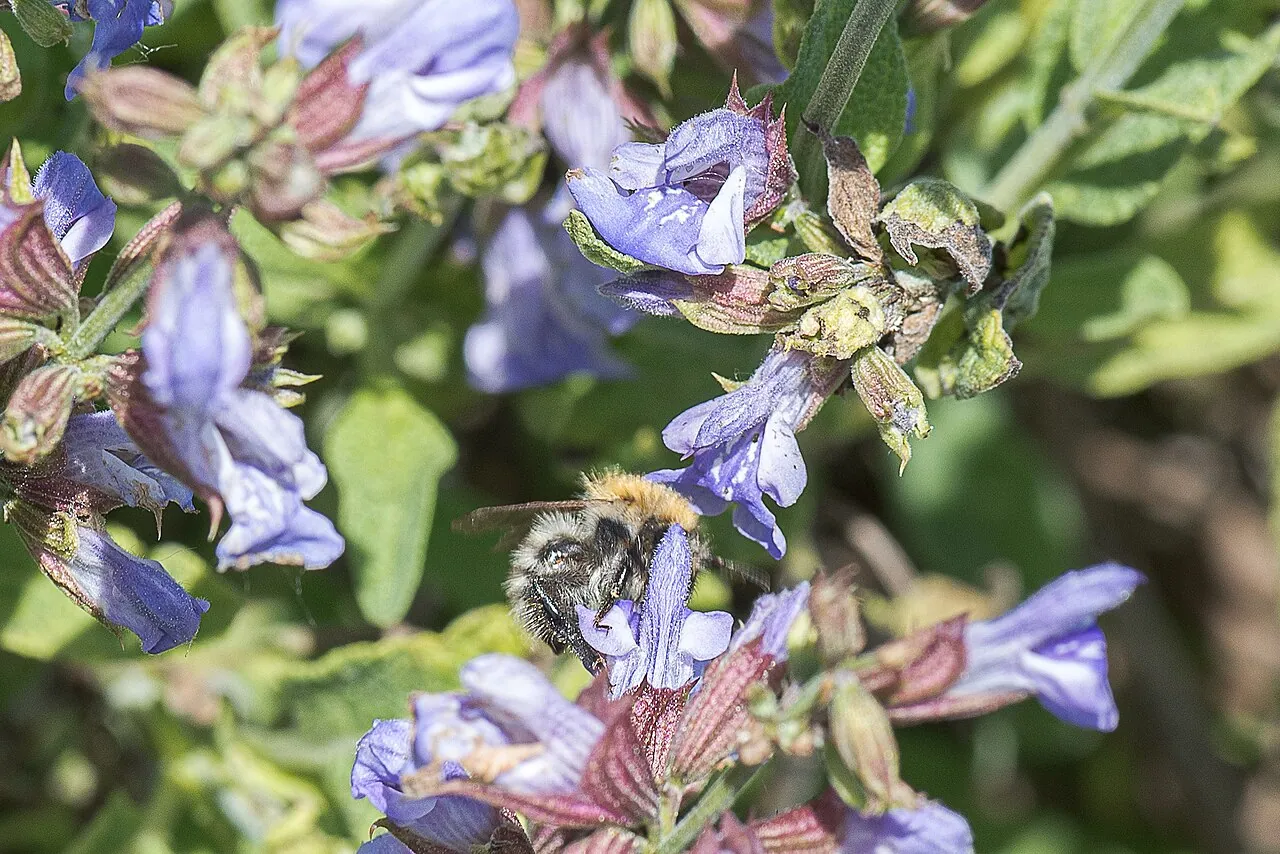
Common culinary sage is Salvia officinalis; many unrelated or differently managed plants also carry sage in their common names. Keep the botanical name with the plant so that pruning advice applies to the right subject. Look through the canopy and distinguish leafy shoots from bare older branches. A shrub can appear full at its edges while having a largely empty centre. Sketch the main branches or take a close photograph before cutting, especially if the plant has been neglected for several years.
Shape above living growth
During suitable spring growth, shorten selected leafy shoots to maintain a compact outline. Work around the plant in small stages and step back between cuts. Avoid treating a sage like a hedge that can safely be cut to any height. Old bare wood may not produce replacement growth reliably, so preserving visible shoots makes the result more predictable. If a branch cannot be shortened enough without entering a bare section, accept a less perfect outline while planning a longer-term replacement.
Let harvesting support the shape
Take kitchen sprigs from different sides rather than repeatedly removing the most accessible shoots. Keep enough leaves to support the remaining branch. After flowering, tidy spent stems when appropriate, while retaining useful foliage below. Check whether adjacent plants have shaded the lower sage branches and contributed to their bare appearance. Pruning cannot compensate indefinitely for a crowded or poorly lit position. A little more space around the plant may improve future growth more effectively than another round of trimming.
Raise a successor before the old plant fails
Healthy young growth can provide material for propagation at a suitable time. Keep a replacement in a separate labelled pot and allow it to establish before removing the old shrub. This is particularly helpful for a favourite coloured-leaf variety that you want to retain. Compare the new plant's growth with the old one under similar light. When the younger plant becomes useful, you can change the arrangement without losing your kitchen supply or expecting severe pruning to reverse years of woody development.
A little further reading
Match these general notes to your plant variety, climate and local conditions.