Look inside the clump
Part the leaves and inspect the base before deciding a pot simply needs feeding. A dense mass of small bulbs and roots may have filled the available space, while the centre can become less productive than the outside. Check drainage and moisture as well. Chives naturally change through the seasons, so winter dieback should not be confused with permanent failure. Keep a picture of the clump during strong growth; it gives you a more useful comparison when assessing its condition later.
Divide into workable pieces
At a suitable growing time, lift the clump and separate it into healthy sections with roots and shoots. A division does not have to be reduced to individual tiny bulbs. Choose pieces large enough to establish reliably and remove clearly dead material. Replant at a comparable depth in suitable soil or potting mix, then water to settle it. Label divisions immediately if several kinds of chives are being grown, since their leaves may be difficult to distinguish when freshly trimmed.
Alternate the harvest area
Snip leaves cleanly near the base, leaving the growing points undamaged. Take a portion of the clump and let it regrow while another portion supplies the next picking. This is easier to manage than trimming the tips from every leaf and leaving a ragged canopy. Newly divided sections should first produce convincing fresh growth before supplying a heavy harvest. Keep the amount you cut proportional to the plant's current vigour, especially during cool periods when replacement leaves develop more slowly.
Make room for the flowers
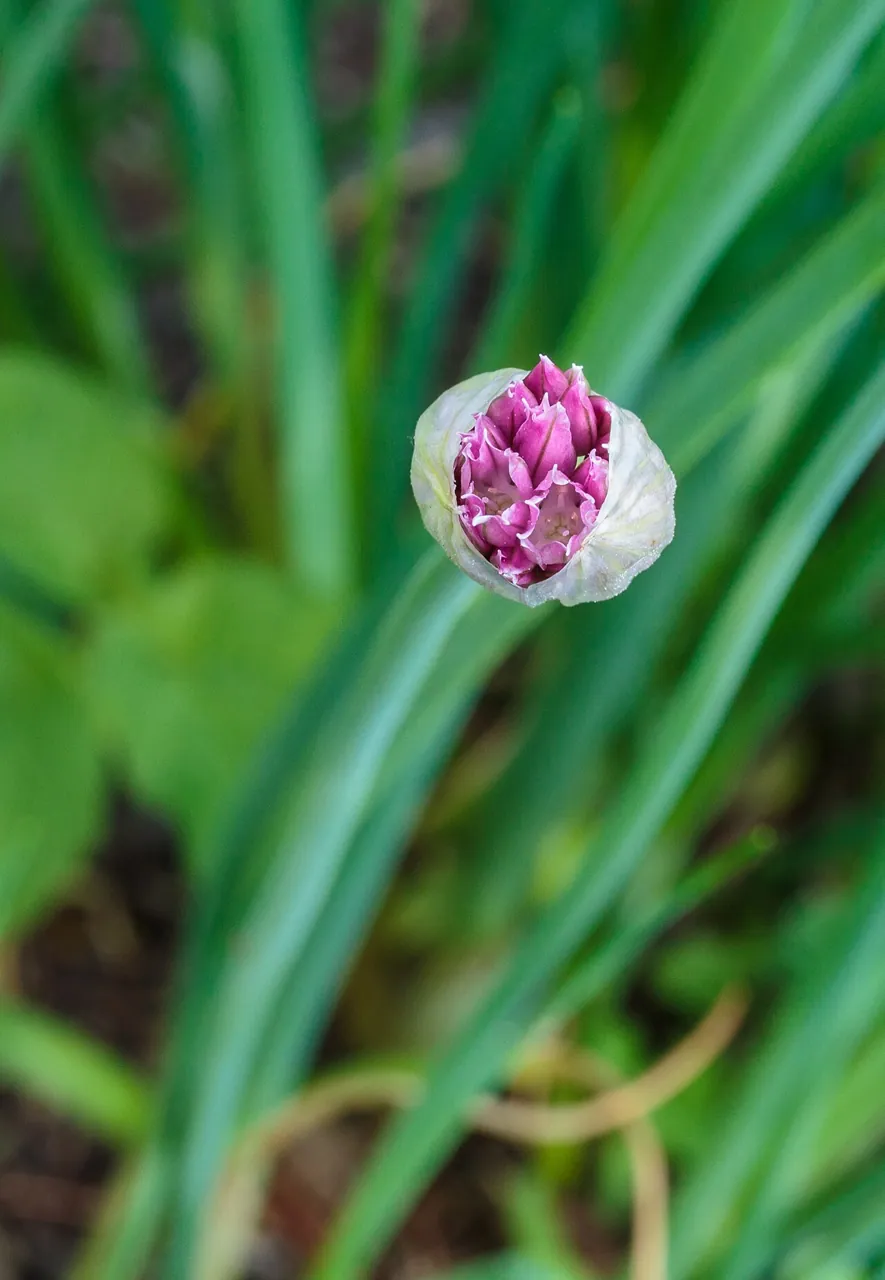
Chive flowers are attractive to visiting insects and can be part of the display rather than treated as a defect. If leaves are the priority, reserve a different section or pot for flowering. Remove unwanted spent flower stems before seed dispersal becomes a nuisance. Record which divisions stayed productive and whether the container dried too quickly during summer. The following renewal can then improve the pot size or position as well as relieve crowding, making division a useful review of the whole growing arrangement.
A little further reading
Match these general notes to your plant variety, climate and local conditions.