Open the pile's recent history
Think back to the last few additions. A large batch of grass clippings, a bucket of wet food scraps or several days of rain can change the pile quickly. Note whether the smell is strongest near a particular layer or throughout the bin. Inspect with a fork and appropriate gloves rather than placing your face close to the material. The aim is to identify the conditions producing the odour, not to describe every smell with a precise chemical name.
Check for a wet compressed layer
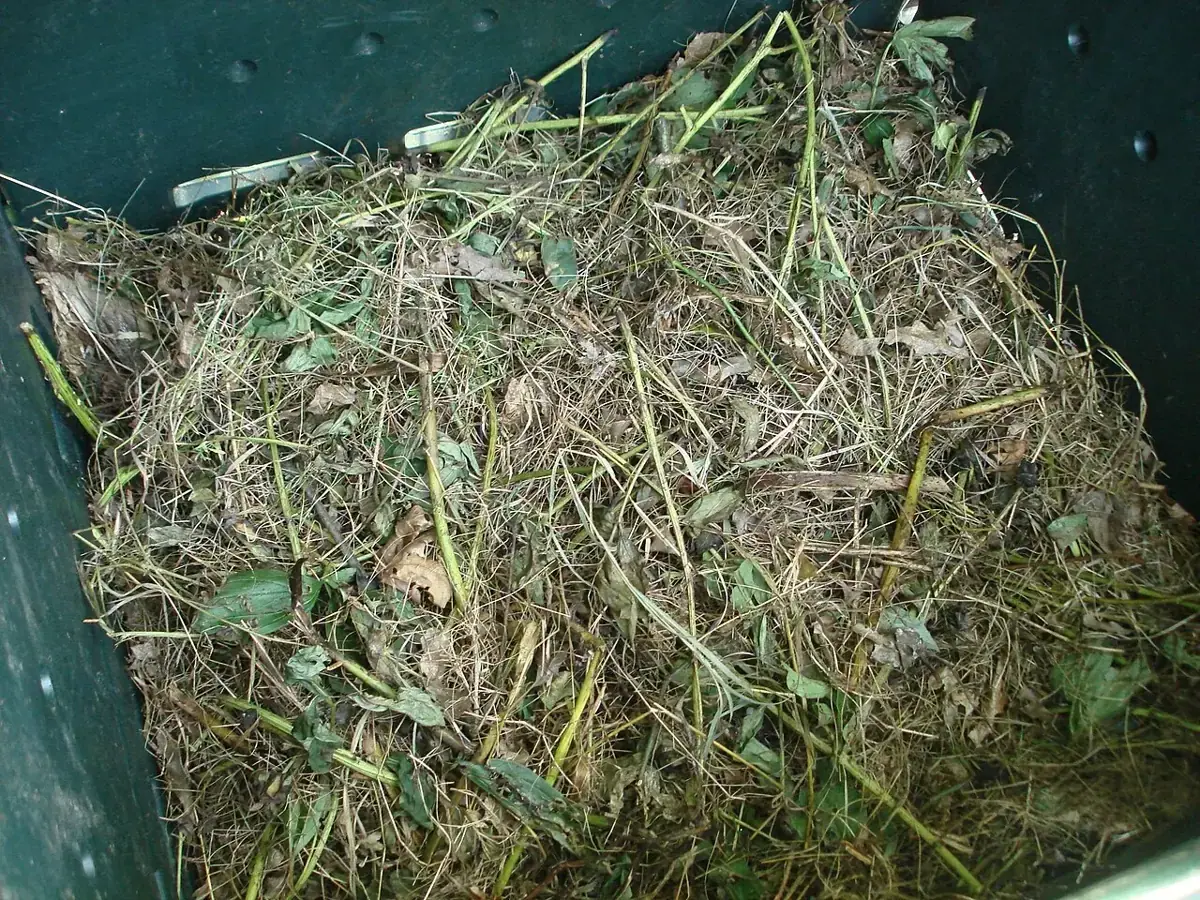
Grass and soft kitchen material can form dense mats that exclude air. Break these up and mix them with suitable drier, more structured ingredients such as shredded cardboard or dry leaves. If the pile is saturated, review rain entry and drainage as well as the ingredient balance. Simply placing a neat brown cap over a wet interior may reduce the immediate smell without improving the material underneath. Work through the affected section so the adjustment reaches the source.
Adjust one imbalance with a clear reason
An ammonia-like smell can indicate excess nitrogen-rich material relative to available carbon, while sour conditions often accompany poor aeration and excessive moisture. These are practical clues rather than a laboratory diagnosis. Add suitable carbon-rich material and mix, then reassess the moisture and structure. Do not add fertiliser automatically to a pile that is already rich in fresh greens. Avoid ingredients unsuitable for a simple home compost system, and remove obvious contamination rather than trying to compost it away.
Judge the change over the next few visits
Record the adjustment and check whether the interior becomes more open and the odour less offensive. A small cool bin may decompose slowly without being faulty, and it does not need to reach a dramatic temperature to be useful. Keep new additions modest while the balance improves. Before using the finished material around plants, allow it to mature until it is stable and recognisably composted. The goal is not a momentarily odourless surface but a pile whose ingredients, moisture and air supply remain workable as the next kitchen bucket or garden load arrives.
A little further reading
Match these general notes to your plant variety, climate and local conditions.