Turn the empty pot over
Before choosing a plant, inspect the container's base. Some pots have open drainage holes, while others have moulded circles that must be opened according to the product's instructions. A decorative bowl without drainage is better used as an outer holder for a separate growing pot. Check that the inner pot can be removed easily when wet and heavy. A beautiful close fit becomes inconvenient if watering requires tipping the whole arrangement sideways to reach trapped runoff.
Keep the growing medium continuous
A layer of gravel beneath potting mix does not improve drainage in the way many gardeners expect, and it reduces the space available for roots. Use a suitable medium through the growing volume instead. If a large hole needs a cover to prevent excessive loss of mix, choose something that does not block water movement. Avoid packing the bottom with material whose behaviour is unknown. The purpose is a clear drainage route and an appropriate root environment, not an invisible decorative layer.
Test the container as a complete system
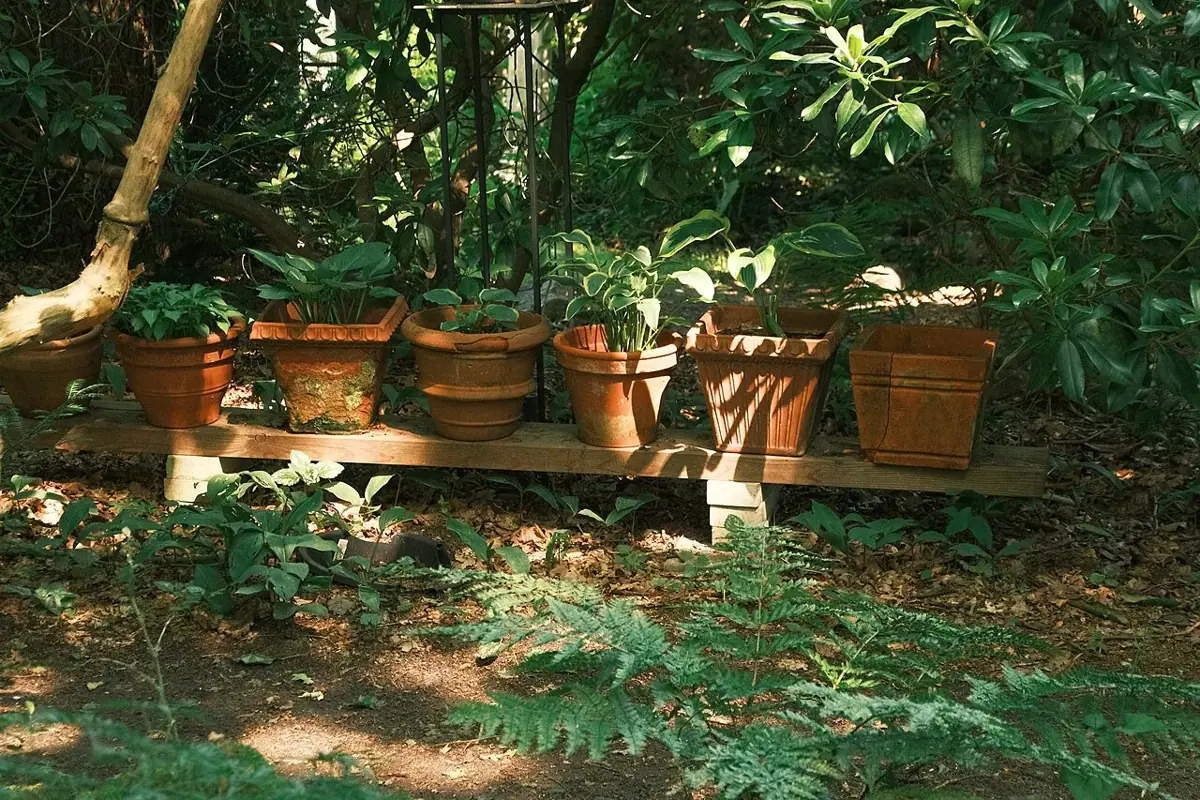
Place the pot on the surface where it will live and confirm that its holes are not sealed against flat paving or an unsuitable saucer. Where needed, use appropriate pot feet or another stable arrangement that allows water to escape. Water an empty or newly filled setup carefully and observe where runoff goes before placing it over delicate flooring. For an indoor cachepot, establish a routine of removing the inner pot or emptying collected water after drainage.
Recheck after roots and seasons change
Drainage that worked at planting can be altered by roots, debris or a shifted liner. Inspect the base when a pot suddenly stays wet longer than expected. Also consider temperature, light and plant activity, since slower drying is not always a blocked hole. Keep the container accessible enough for these checks. A sound pot design makes normal watering straightforward and allows problems to be seen early; it should not require guessing how much hidden water remains underneath the roots every time the plant looks unhappy.
A little further reading
Match these general notes to your plant variety, climate and local conditions.