Recognise bypass rather than good drainage
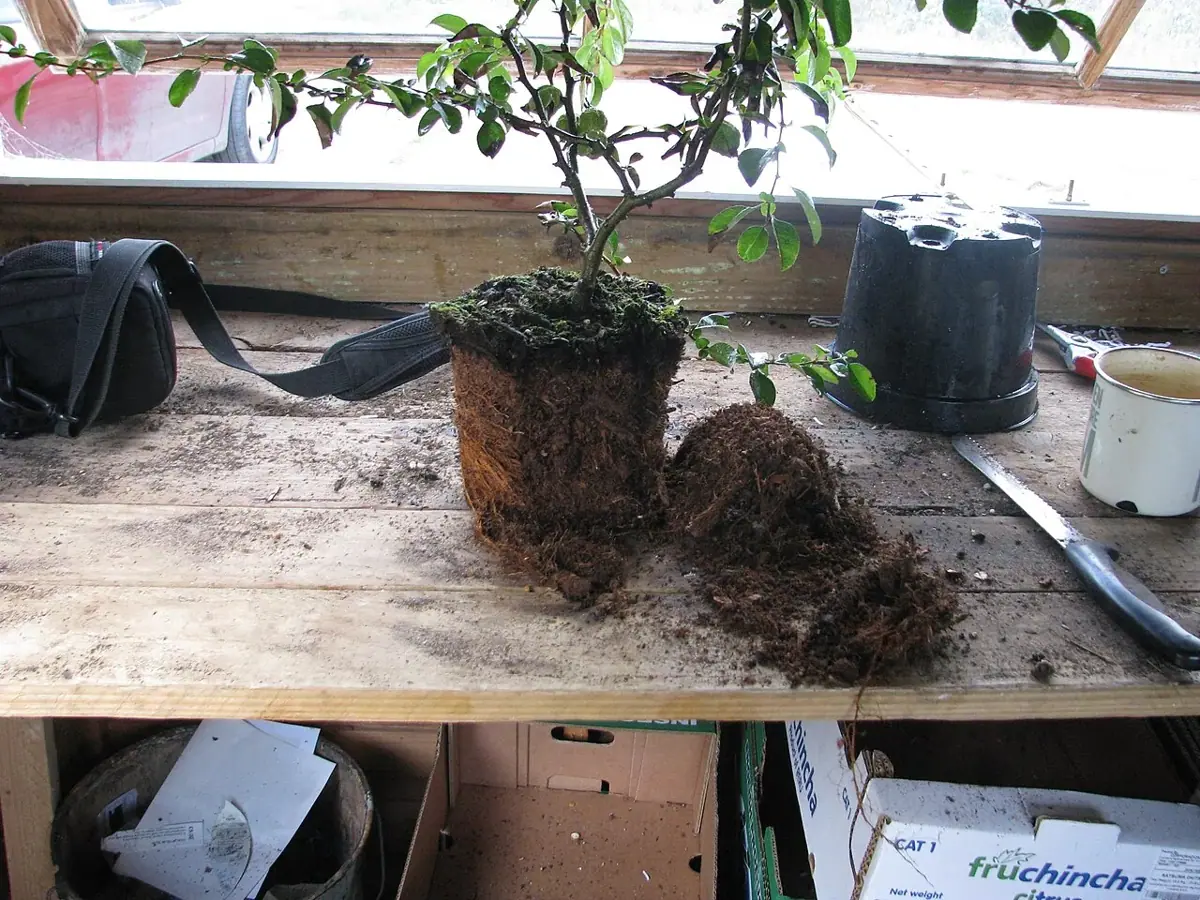
Watch what happens when water first reaches the pot. If it immediately disappears down a gap at the edge while the pot remains unusually light, the centre may still be dry. Some growing media shrink and become difficult to rewet after excessive drying. Gently inspect the accessible surface and compare moisture in more than one place. Fast runoff alone does not prove the roots received water. Stop and investigate before pouring repeated large volumes through the same channel.
Rewet in controlled stages
Apply a small amount slowly across the surface, pause to let it penetrate and repeat as the mix begins accepting water. A manageable pot may be stood temporarily in a shallow container of water so moisture can enter from below, provided the plant and pot are suitable for this approach. Monitor the process rather than leaving it indefinitely. Keep the crown and foliage out of unnecessary submersion. Once the root ball has rewetted, remove the pot and allow excess water to drain freely.
Check the centre before declaring success
The outside of the root ball may become damp sooner than its middle. Recheck weight and accessible moisture after drainage, taking care not to damage roots with repeated probing. If dry pockets remain, continue patiently rather than adding a concentrated feed or household detergent. A horticultural wetting agent should be used only when appropriate and according to its label. If the mix has severely degraded or roots are extremely congested, plan a suitable repotting assessment after the immediate moisture problem is stabilised.
Prevent the same cycle returning
Identify why the pot became excessively dry: an undersized container, a hot position, missed checks or a mix that does not suit your routine. Adjust the cause rather than relying on emergency soaking as normal care. Record how the pot feels when adequately watered and when it next approaches its appropriate watering point. That comparison is useful for future checks. The aim is a root environment that changes gradually within the plant's needs, avoiding repeated swings between a water-repellent core and prolonged saturation.
A little further reading
Match these general notes to your plant variety, climate and local conditions.