Identify the way the plant builds itself
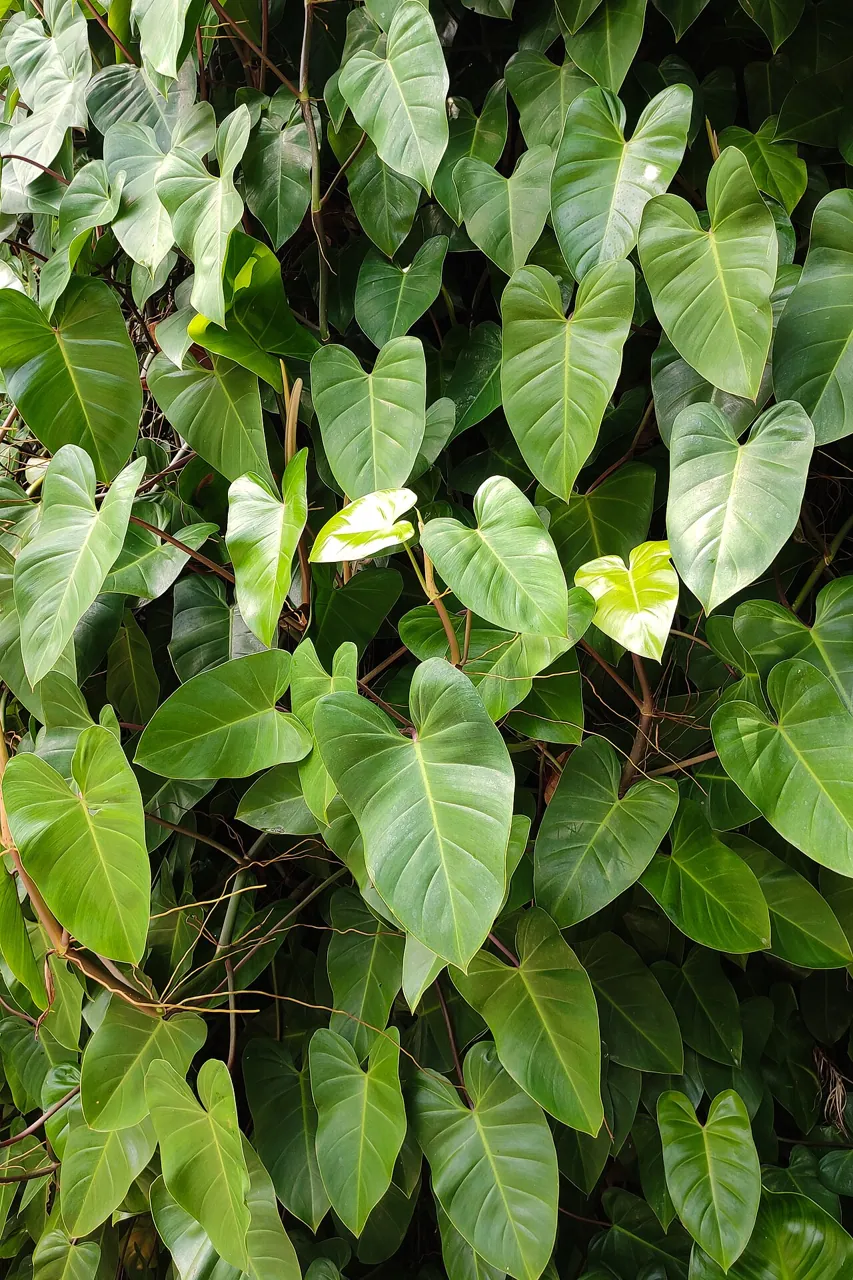
Heartleaf philodendron is a climbing or trailing vine, but the wider philodendron group includes plants with very different forms. Trace the newest growth back through the plant. A long stem with repeated nodes suggests a vine; a compact crown or a stem creeping across the medium needs a different assessment. Find the full name on the label and compare it with a reliable description. Buying a moss pole simply because the plant is called a philodendron can create an awkward arrangement.
Choose trailing or climbing deliberately
A heartleaf philodendron can make an attractive trailing plant, or it can be guided upward. Consider the available room and how you will reach the pot for watering. A hanging vine over a doorway may become inconvenient, while a climbing specimen may eventually outgrow a short support. Sketch the intended direction and check it from your normal sitting position. The best arrangement supports the plant's habit while leaving the room comfortable to use.
Connect stems gently to the structure
For a climbing vine, position a suitable support close to the stem and its nodes. Use loose ties to guide growth rather than binding every leaf stalk. If the existing vine has stiffened into a curve, make gradual adjustments instead of forcing it straight. Inspect the base of the support for stability before extending it upward. A dry decorative pole may act only as a physical prop; do not assume it will automatically produce attached aerial roots or dramatically larger leaves.
Judge the newest section of vine
Provide appropriate indirect light and a potting medium that does not remain saturated. Compare leaf size and node spacing on the newest section with older growth, allowing time during the active season. If the vine remains thin and widely spaced, review placement before adding more support hardware. Keep a dated photograph of the growing tip and the whole outline. This simple record helps distinguish a successful change in habit from a merely tidier arrangement of old stems that are still growing under unsuitable conditions.
A little further reading
Match these general notes to your plant variety, climate and local conditions.