Choose the room position with care
A fiddle-leaf fig is a tree with substantial leaves, not a small ornament that can be moved into a dark corner whenever furniture changes. Select suitable bright indirect light and allow room above and around the canopy. Check for heating vents, cold window drafts and doors that open frequently. Stand where the plant will be placed and observe the daylight over several hours. A position that looks attractive in an evening photograph may be poorly suited to growth during the day.
Establish one clear watering reference
After a thorough watering and free drainage, note the pot's weight and the condition of the medium. Check below the top layer before watering again, and lift the inner pot from any decorative container to inspect for trapped water. Avoid using a single brown leaf patch as proof of thirst. Root problems, watering inconsistency and environmental stress can produce overlapping symptoms. Record what the medium feels like when damage appears so later decisions have a physical observation behind them.
Make changes slowly enough to interpret
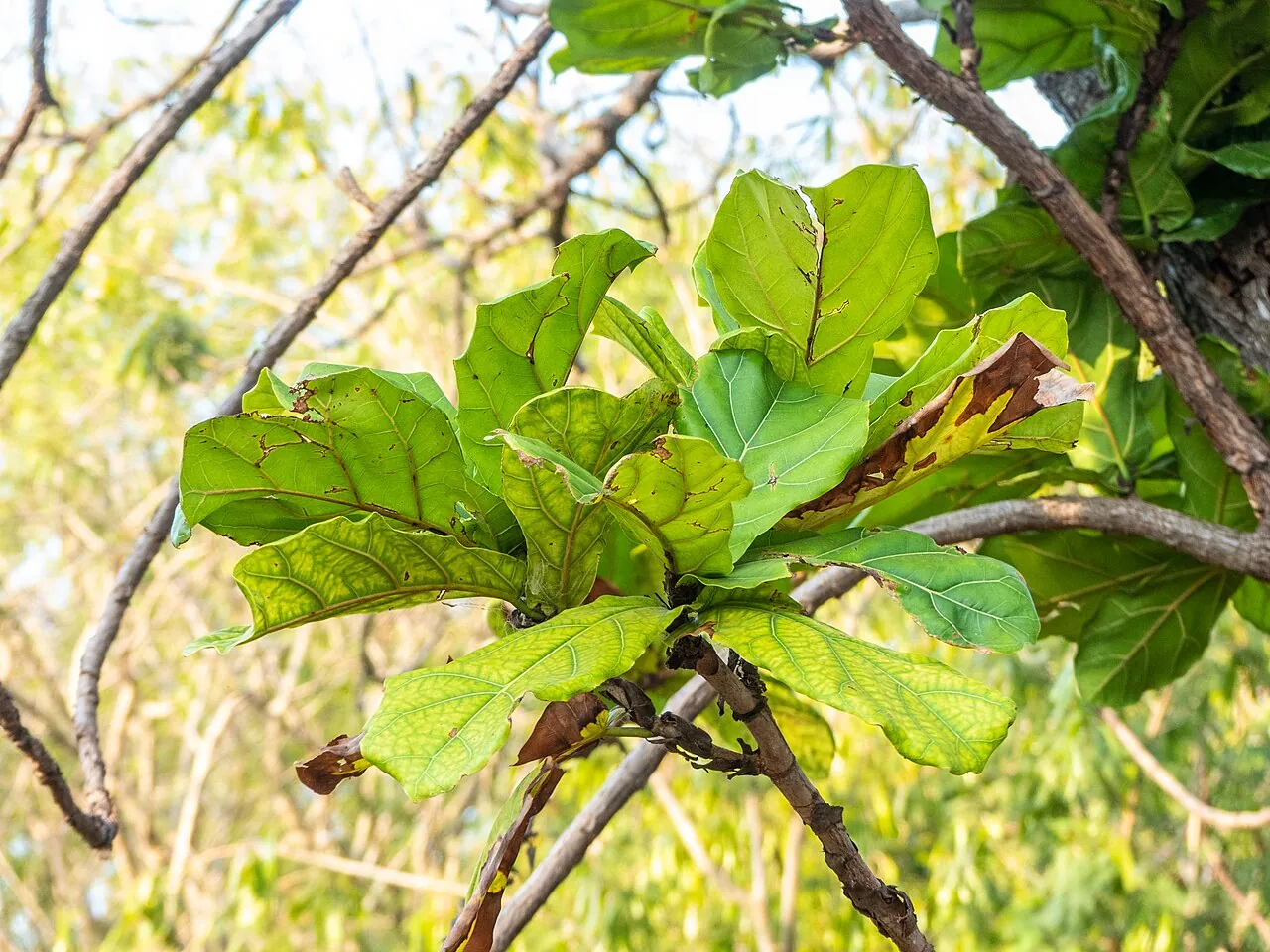
If the current spot is unsuitable, move the plant to a better one with gradual acclimatisation to stronger light. Once it is in reasonable conditions, avoid cycling through several new locations in a week. Keep a short record of the move, watering and any further leaf loss. Clean dusty leaves gently, supporting each broad blade. When pruning or handling damaged tissue, protect skin and nearby surfaces from the milky sap, which can irritate and leave marks.
Watch the next leaves, not old scars
Damaged leaf tissue will not turn healthy green again. Compare newly developing leaves with older ones and note whether further damage is appearing. Photograph the whole plant monthly from the same position, including the pot and a fixed background point. That shows changes in balance and growth more clearly than repeated close-ups. If deterioration continues despite a stable suitable location, inspect roots and seek a diagnosis with photographs and the watering record. A steady position is part of good care, but it should not become an excuse to leave a plant in conditions that are clearly failing.
A little further reading
Match these general notes to your plant variety, climate and local conditions.