Read the history along the trunk
Look at where leaves remain, where scars are visible and whether loss is still continuing. An occasional old lower leaf dropping is different from several leaves yellowing in quick succession. Note recent moves, cold drafts, watering changes and the amount of light reaching the lower canopy. Take a full-length photograph against a plain background. It provides a clearer record than close-ups of a single damaged leaf and helps you see whether the plant is becoming increasingly top-heavy.
Preserve the leaves that remain
Place the plant in suitable bright indirect light, with protection from abrupt harsh exposure if it has been growing in shade. Check the potting medium before watering and empty any trapped runoff. Clean broad leaves gently with a damp cloth while supporting them from beneath. Avoid frequent moves between rooms in search of instant improvement. Observe whether current leaves remain stable and new leaves develop normally before deciding the plant needs a dramatic structural change.
Choose a tree or a branching form
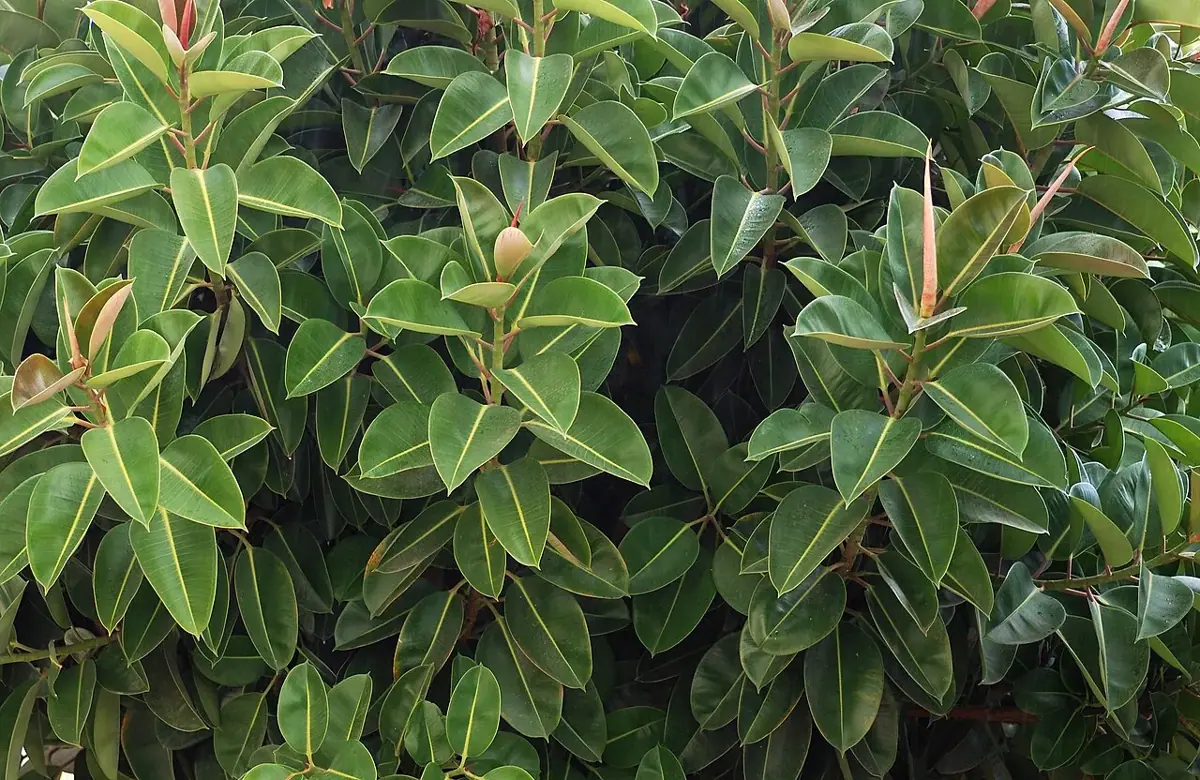
A tall narrow rubber plant can be an intentional shape, so a bare lower trunk is not automatically something to disguise. If a bushier outline is desired, pruning during suitable active growth can encourage branching, but the exact response depends on the plant. Identify a healthy node and plan the cut before starting. Use gloves and protect furniture from the milky sap. Do not remove most of the functioning foliage from a plant that is already struggling to sustain itself.
Judge new structure over time
After a cut or placement adjustment, document the plant at intervals rather than checking for daily transformation. Existing leaf scars will not disappear, and branching may develop unevenly. Guide the future outline with light and measured pruning rather than repeatedly shortening every new shoot. If the plant is too large for its location, consider a more suitable position instead of forcing it into a permanently cramped corner. A successful recovery is shown by retained leaves and balanced new growth, even when the lower trunk still records its earlier life.
A little further reading
Match these general notes to your plant variety, climate and local conditions.