Describe the damage precisely
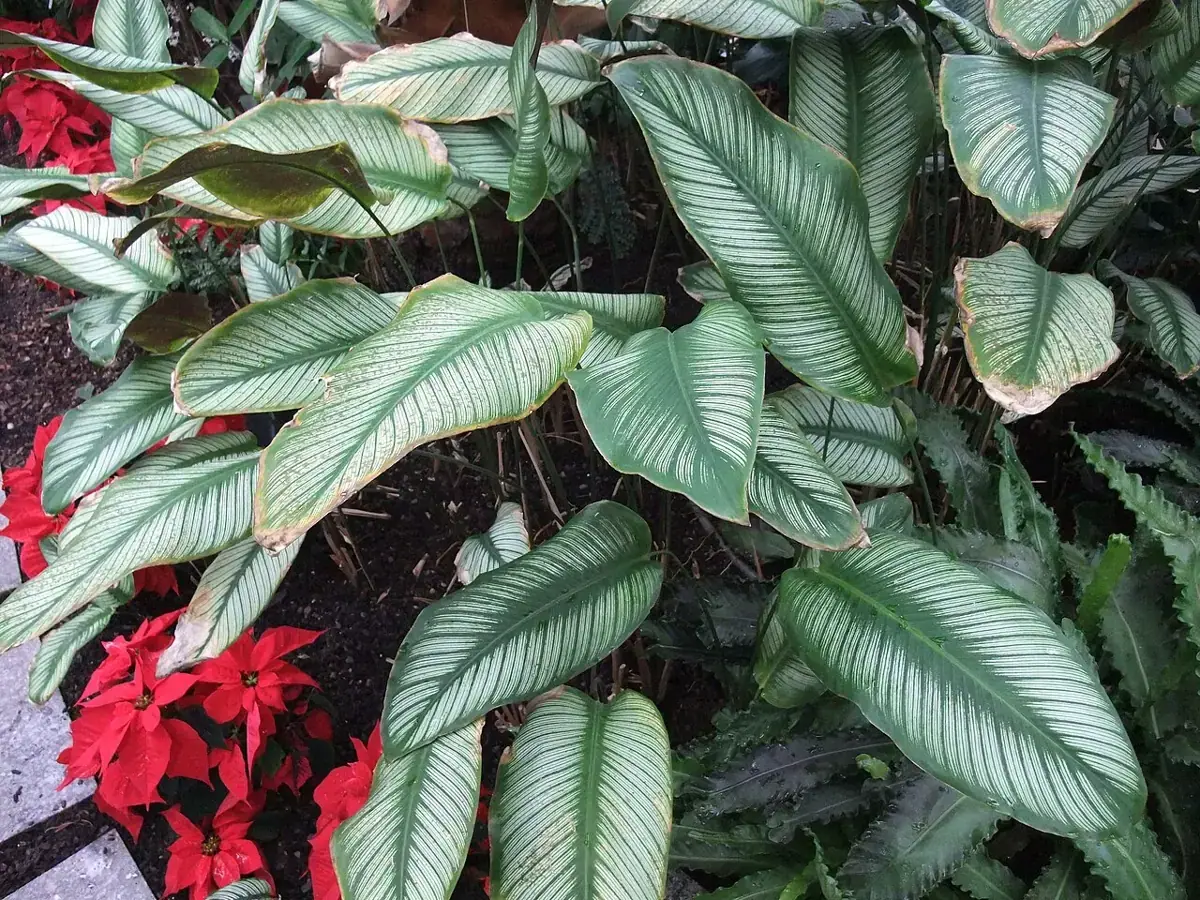
Many plants still sold as calatheas are now classified as Goeppertia. Keep the species or cultivar name because their appearance and tolerance can vary. Note whether browning affects the tips, the entire margin or isolated patches, and whether it appears mostly on older leaves. Photograph the upper and lower surfaces in daylight. A specific description helps separate gradual environmental wear from an active pest problem or a sudden episode of sun or cold damage.
Check the root environment first
Feel the medium below the surface and inspect the outer pot for standing water. These plants generally prefer consistent moisture with drainage, rather than repeated complete drying or continuous saturation. If the pot stays wet for many days, review its size, medium and light. If it dries rapidly, check for a heater or a congested root system. Do not respond to every curled or browned leaf with water before establishing whether the roots are actually dry.
Inspect the air and the leaves
Look for direct sun, cold drafts and hot airflow that could affect one side of the plant. Examine leaf undersides closely for tiny pests, fine webbing or unusual marks. A humidity reading near the foliage can provide context, but it does not diagnose the whole problem. If water quality or fertiliser salts seem relevant, make a measured change and record it. Avoid combining several remedies at once, which can introduce new stress while hiding the cause of any improvement.
Track the next unfolding leaf
Existing brown tissue will remain brown even after conditions improve. Mark the date of your adjustment and watch the next leaves develop over time. Normal daily leaf movement should not be confused with permanent wilting. Trim only what is necessary for appearance, leaving useful healthy tissue and avoiding damage to the crown. Compare photographs after several weeks of active growth. A reduction in fresh damage is a meaningful result, even if the older foliage still carries a few imperfect edges from the plant's previous conditions.
A little further reading
Match these general notes to your plant variety, climate and local conditions.