Compare old and new stem spacing
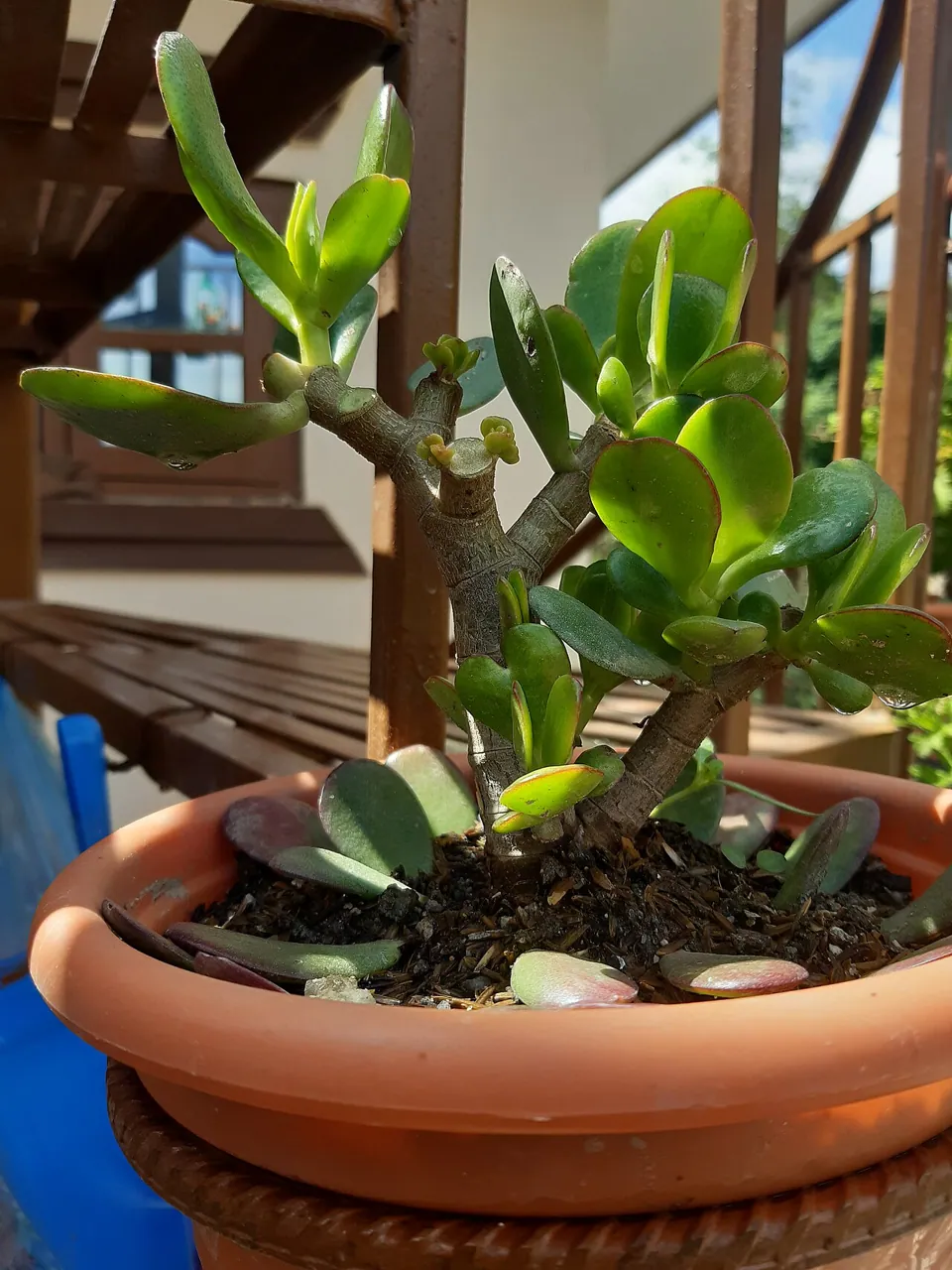
Look at the distance between pairs of leaves along a jade plant's newest stems. Long weak sections and a persistent lean can suggest inadequate light, especially when the lower growth was previously compact. Photograph one representative branch beside the whole plant. Remember that different cultivars have different leaf shapes and habits, so compare the plant with its own earlier growth rather than with an unrelated miniature variety in a catalogue.
Give light a gradual upgrade
Choose a brighter suitable position and increase exposure carefully if the plant has been in shade. Sudden strong sun can damage foliage that is not accustomed to it. Watch the newest growth over a meaningful period before deciding the change has failed. Keep the pot stable as the plant becomes heavier, and avoid a narrow vessel that tips easily. A well-lit jade can develop a substantial branching structure, so plan for its mature balance rather than only its current height.
Water the root ball, then wait appropriately
Use a freely draining medium and a pot with drainage holes. Water when the medium has dried suitably, allowing excess to escape instead of collecting in an outer sleeve. Soft leaves do not always prove thirst; if the roots are wet or damaged, adding more water may worsen the situation. Check the medium and base before responding. Reduce the expectation of frequent watering when growth slows and light declines, while continuing to inspect rather than abandoning the plant for an arbitrary number of weeks.
Prune after the conditions make sense
Once the plant is healthy and actively growing, selected cuts can encourage a more balanced outline. Choose the intended branch points before starting and avoid removing so much foliage that recovery becomes difficult. Handle brittle stems carefully and keep suitable cuttings separate if you intend to propagate them. Photograph the result from the same angle as the original. Judge the next flush by its firmness and spacing, not merely by how neatly old branches were shortened. The goal is a structure that can remain compact under everyday conditions, with less need for repeated corrective cutting.
A little further reading
Match these general notes to your plant variety, climate and local conditions.