Start with the right cactus story
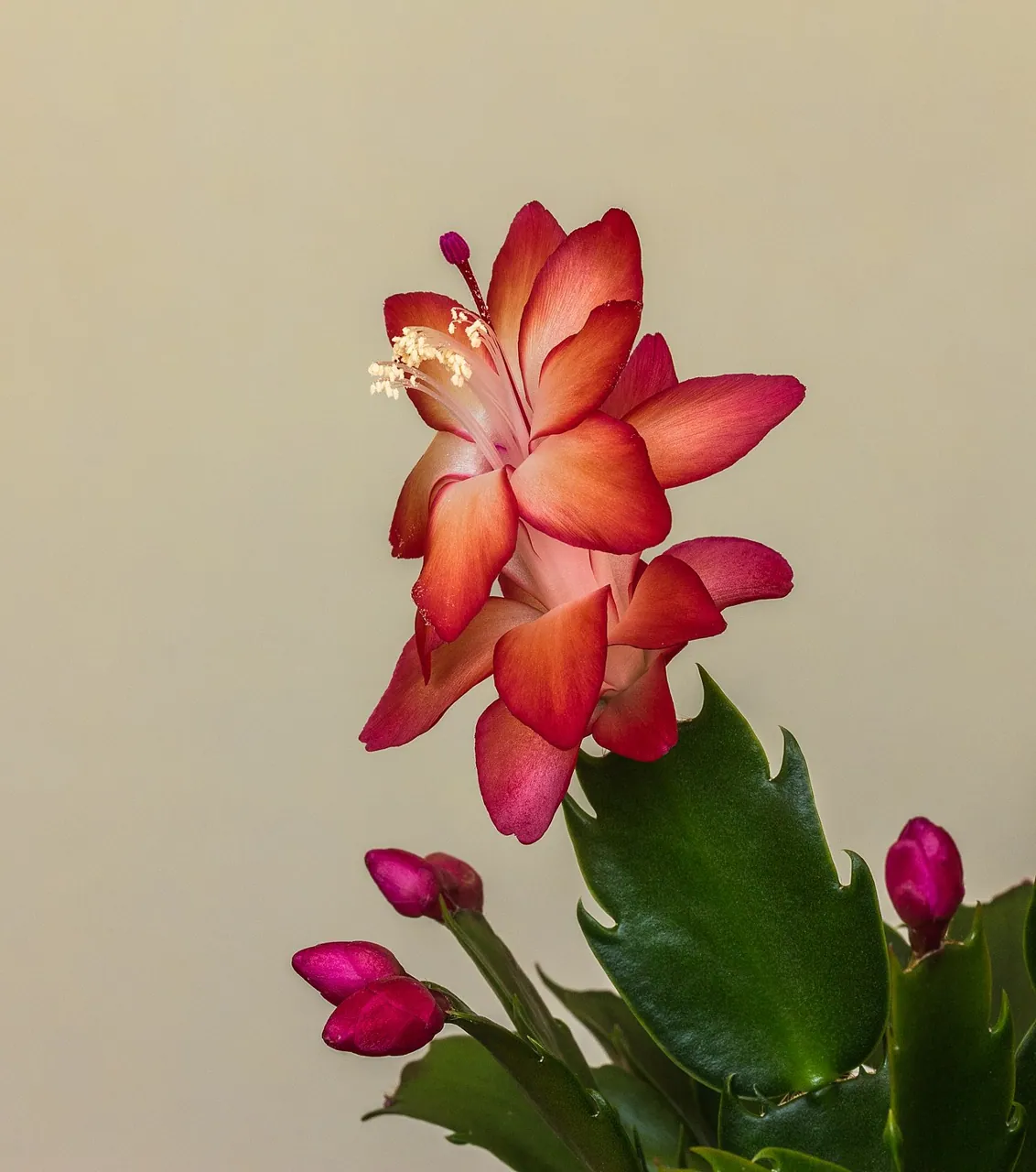
Schlumbergera, commonly sold as Christmas or Thanksgiving cactus, comes from a very different habitat from desert cacti. Its flattened segmented stems suit a plant that grows in humid forest settings. Easter cactus belongs to a related but distinct group and can have different timing. Keep the name where possible and photograph the segment shape and flowers. This prevents a shop's holiday label from becoming the only basis for year-round care.
Build an airy but workable root space
Use a suitable potting medium with good drainage and a container that does not leave a large unused volume permanently wet. Water according to the medium's condition, allowing some drying without routinely subjecting the plant to prolonged severe drought. Check the inner pot after watering, especially if it sits inside a decorative bowl. Limp segments can occur in more than one situation, so inspect roots and moisture before deciding that the plant simply needs another soak.
Notice the light after sunset
Flower initiation is influenced by seasonal day length and temperature, with details varying by type and conditions. A room that stays brightly lit late into the evening may interrupt the long dark nights useful for bud development. Record the evening lighting pattern as well as daytime placement. Do not place the plant in a cold dark cupboard as a substitute for a suitable seasonal regime. It still needs appropriate daytime light and protection from damaging temperatures while preparing to flower.
Keep the bud stage steady
Once buds develop, avoid abrupt changes in temperature, moisture and position. Make sure the plant can remain in a suitable location through the display rather than being moved between a cool window and a hot party room. Remove finished flowers carefully and review any bud drop with the recent care record. A holiday cactus does not owe its owner a bloom on one exact date. Healthy new segments and a repeatable seasonal routine are more useful measures than repeatedly forcing a stressed plant to match the name printed on its gift sleeve.
A little further reading
Match these general notes to your plant variety, climate and local conditions.