Establish the pot's normal rhythm
After watering thoroughly and allowing drainage, lift the pot if practical and notice its weight. Check the medium again over the following days, feeling below the surface rather than relying on a dry-looking crust. Record when it becomes lighter and when the upper medium begins to dry. The aim is to recognise the plant's needs before leaves collapse. A weekly calendar can remind you to inspect, but it should not decide automatically that water is required.
Look inside the decorative sleeve
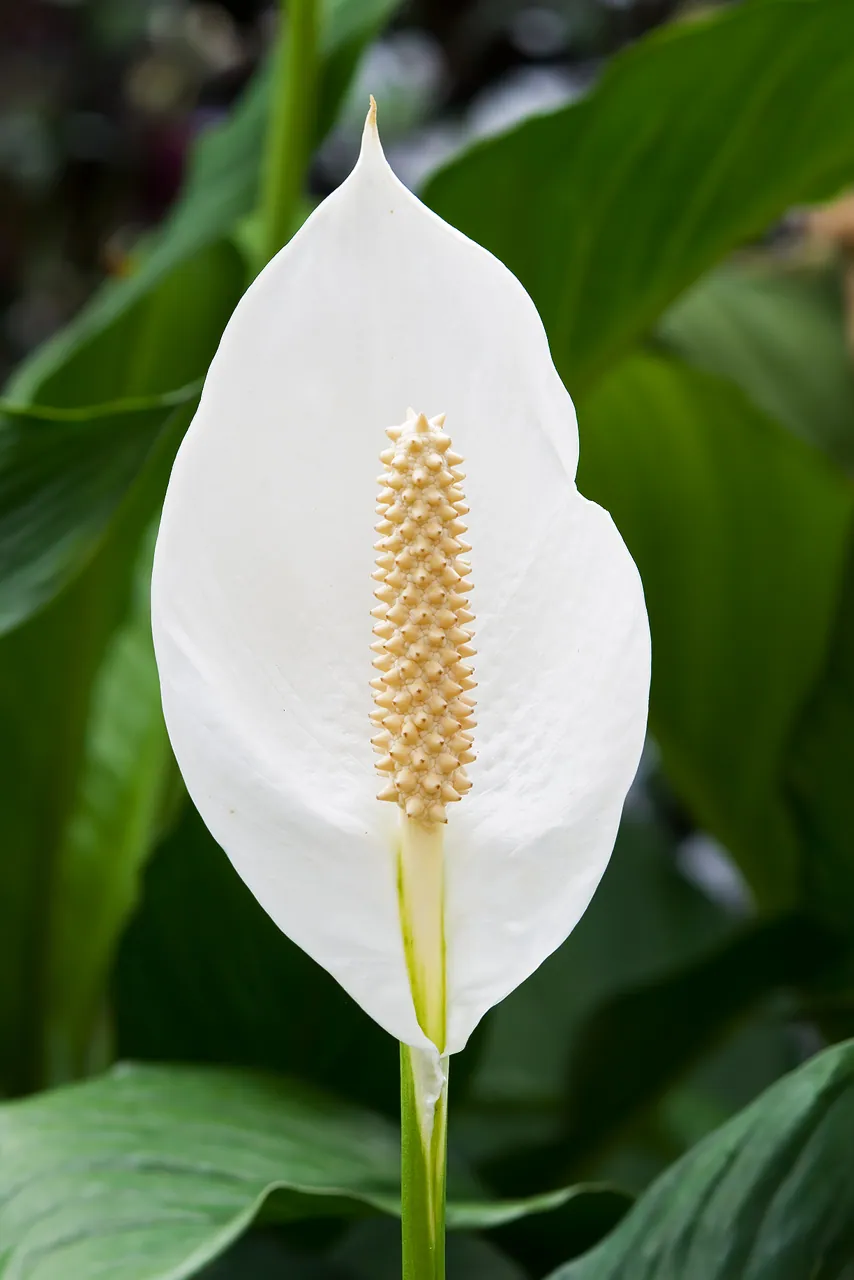
Remove the nursery pot from its outer container and check for standing water. A peace lily may droop when roots are too wet as well as when the root ball is dry. If the medium remains heavy and damp for a long time, adding more water can worsen the problem. Inspect drainage holes and consider light, temperature and pot size. Brown tips alone do not identify one cause, so collect these observations before changing fertiliser, water source and location simultaneously.
Reduce the causes of sudden drying
A root-filled pot, a nearby heater or strong sun can make moisture disappear more quickly than expected. Check whether the root ball is drying evenly or whether water runs down a gap at its edge. If roots are congested, assess repotting into a modestly larger suitable container during active growth. Avoid a huge jump in size that leaves a large volume of unused wet medium. Keep the plant in appropriate indirect light and away from abrupt hot or cold airflow.
Measure improvement by fewer emergencies
For two weeks, note each inspection and whether water was actually needed. Record any wilt together with the medium's condition at that moment. The useful outcome is a steadier plant with fewer extreme wet-dry swings, not a rigid promise to water every third day. Remove fully damaged leaves or spent flower stems as appropriate, but assess new growth for recovery. Existing brown edges will not become green again, so do not mistake their persistence for proof that a sensible adjustment has failed.
A little further reading
Match these general notes to your plant variety, climate and local conditions.