Choose a place that can stay quiet
Find a corner where the pile will not block access, need moving for every garden task or become a play structure. A partly shaded position can offer different conditions from an exposed dry spot. Look at the surrounding planting and how small creatures might reach the area. Keep the feature separate from structures where unwanted moisture or contact would be a problem. The best position is one you can leave undisturbed while still checking that the pile remains stable and safe.
Use suitable wood without importing trouble
Choose untreated, unpainted wood from an appropriate source. Do not collect habitat material from wild sites without permission or move potentially pest-infested wood across restrictions. Logs already arising from suitable garden work can be a practical starting point. Varying sizes and contact with the ground create different spaces, but the arrangement does not need to be elaborate. Avoid materials with protruding nails, sharp fixings or chemical treatments. Handle heavy pieces with help rather than trying to make the pile impressive in one lift.
Build for stability and decay
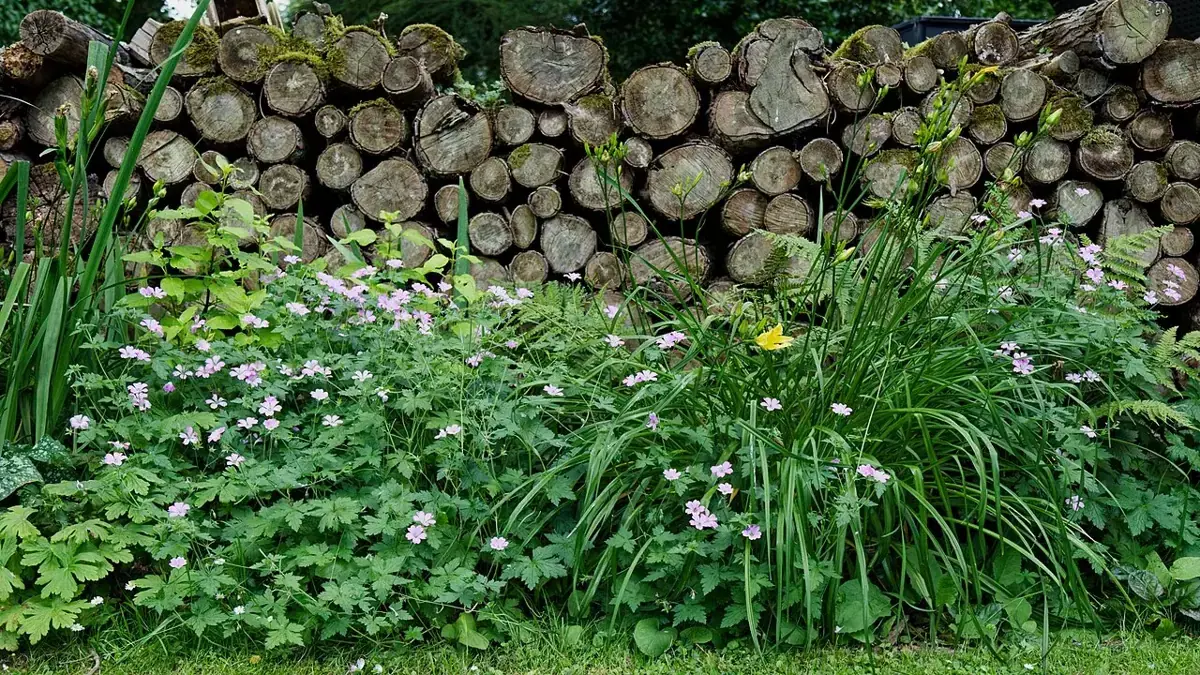
Place larger pieces securely at the base and arrange others so they will not roll into a path. Some ground contact allows the wood to change gradually and become part of the surrounding habitat. A low, stable pile is usually easier to manage than a tall decorative stack. Leave crevices rather than packing every gap tightly. Stand back and check the feature from the usual garden view; a simple edge or nearby planting can make it feel intentional without sealing it off.
Let the feature mature
Decay is part of the purpose, not evidence that the pile needs replacing. Observe from outside and avoid repeatedly lifting logs to search for occupants. Add suitable new material only when it can be done without dismantling established sections. Keep photographs if you want to follow changes in fungi, texture and planting around the pile. Over time, a modest feature that is left in place can offer more continuity than a freshly rebuilt display that is constantly disturbed for tidiness.
A little further reading
Match these general notes to your plant variety, climate and local conditions.