Look beyond the rounded adult shape
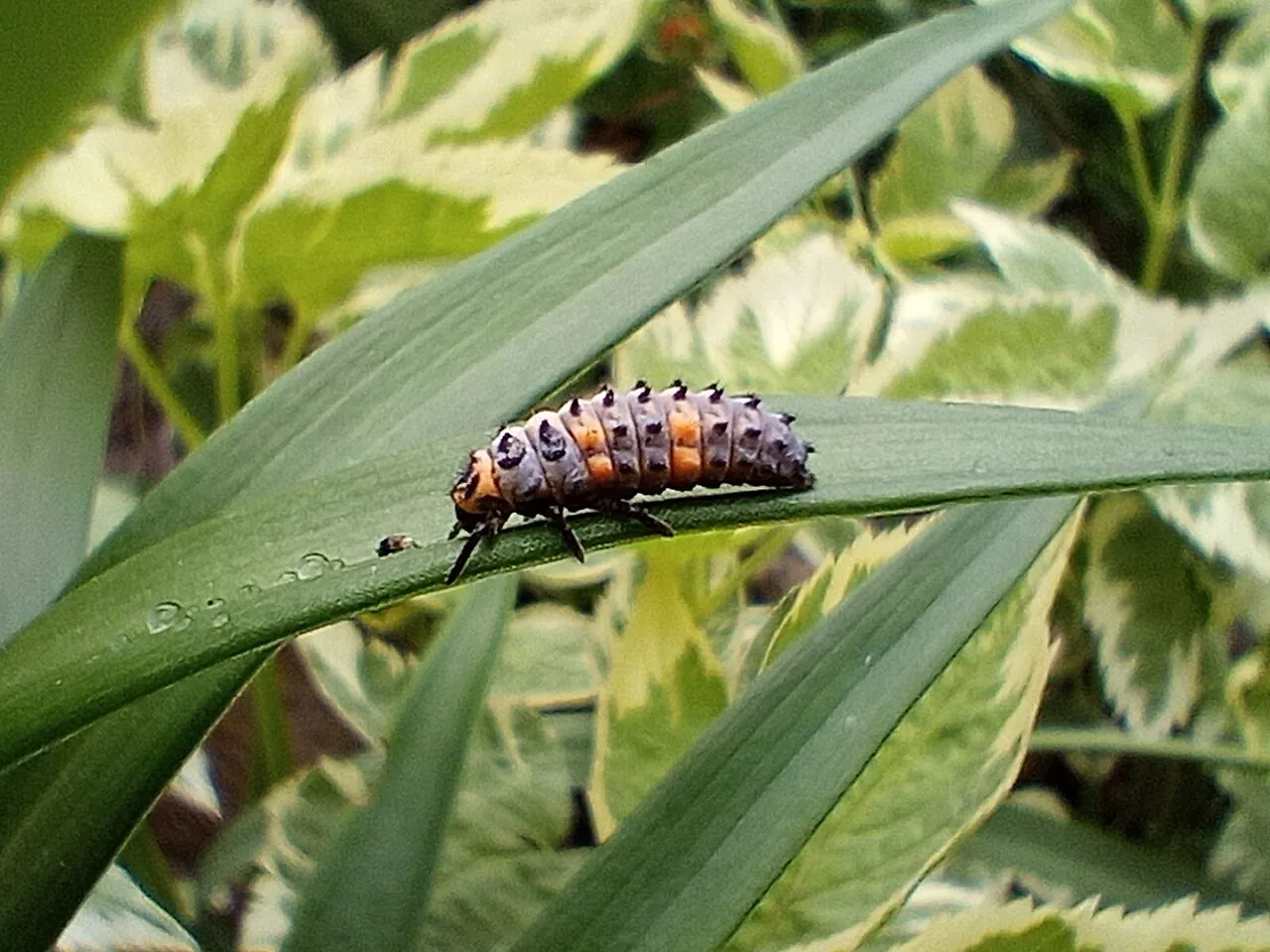
Many ladybird larvae have elongated bodies, visible legs and dark markings rather than the familiar rounded shell of an adult. Some have conspicuous coloured patches or spines. Photograph the insect where it is, including a clear side or overhead view if possible, without handling it unnecessarily. Keep a sense of scale in the image. A description such as 'black insect on rose' is too broad to support a confident identification or a decision to remove it.
Use more than one feature
Compare body shape, legs, markings and behaviour with a reliable local identification resource. Species and life stages vary, so a single colour match is not enough. Notice whether the organism moves among aphids or remains fixed while changing stage, but do not assume its presence proves what it is eating. If the image remains unclear, record an uncertain identification and seek help. It is better to leave a harmless unknown under observation than to turn a guess into a treatment plan.
Think about the plant community
Ladybirds and other natural enemies form part of a wider garden food web. Inspect the whole plant, not only the larva, and note whether the plant is coping with any aphid population. Avoid automatically treating the same area with a broad response that may affect predators as well as the organism you intended to control. Encouraging suitable habitat and tolerating manageable damage can be part of the approach. This does not mean every ladybird species or every garden situation behaves identically.
Keep a small identification record
Save the photograph with the plant name, date and location. If a later stage appears nearby, record it separately rather than claiming it is certainly the same individual. Over several observations, you may become familiar with the larvae and pupae that occur in your own garden. That recognition can prevent unnecessary interventions next season. The useful skill is not memorising every species at once; it is learning to pause, observe and verify before deciding that an unfamiliar insect must be a problem.
A little further reading
Match these general notes to your plant variety, climate and local conditions.