Confirm the plant suits this method
Softwood cuttings use young flexible growth, often in spring or early summer, but suitability and timing vary by plant and climate. Look up the species before cutting. Choose healthy material with the desired habit, avoiding pest-damaged or unusually weak shoots. Identify where the young section becomes firmer, and keep the parent plant's shape in mind. Taking a few well-chosen cuttings is usually more manageable than removing a large amount of growth that cannot be processed promptly.
Prepare the destination before collecting
Set out clean pots, a suitable propagation medium, labels and a clean cutting tool. Make sure the medium is evenly moist and drains appropriately. Decide how humidity will be maintained and where the cuttings will receive suitable light without overheating. Collect material when it is well hydrated, and keep it cool and protected from drying while you work. A transparent bag in direct sun is not a safe holding place; it can become hot very quickly.
Reduce the cutting to a workable structure
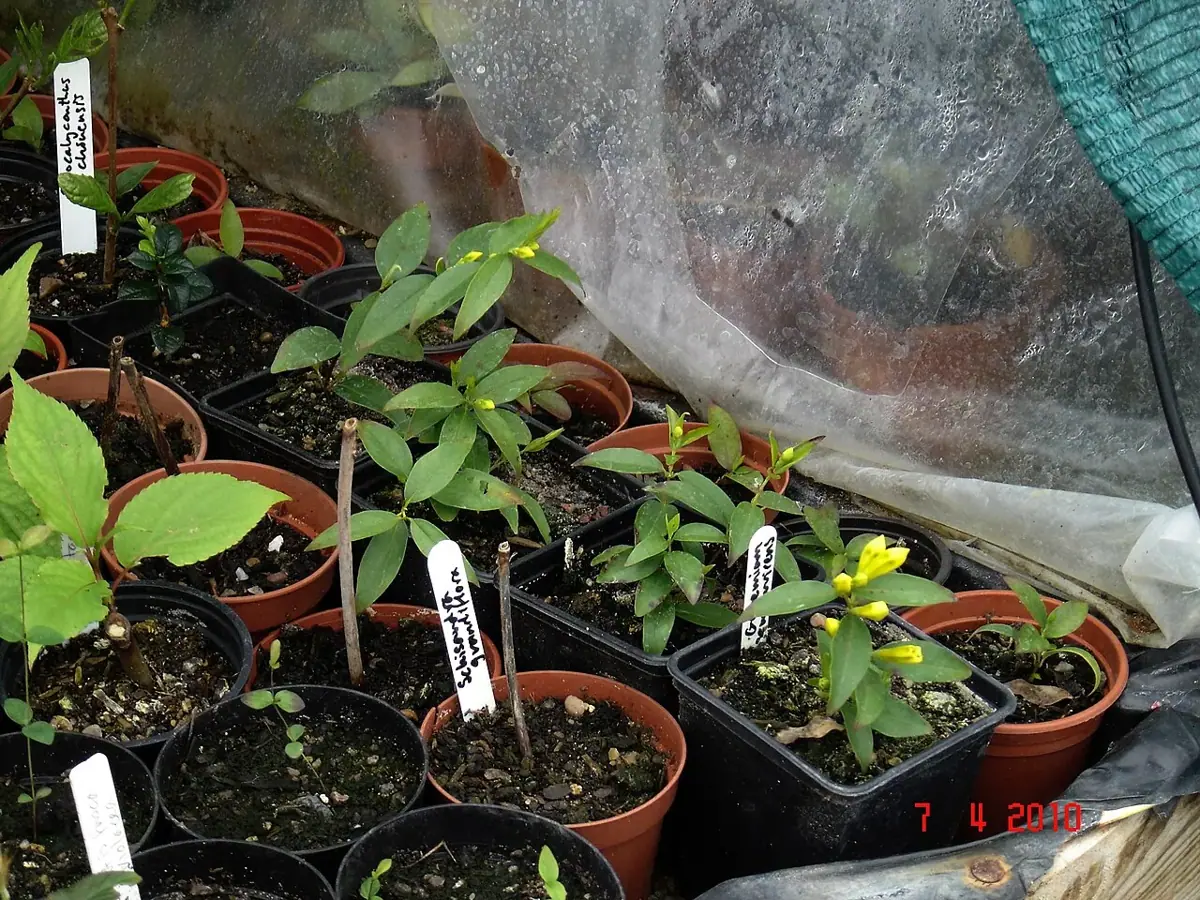
Prepare each cutting according to the species' guidance, usually retaining a suitable leafy tip and removing lower leaves that would sit in the medium. Make the basal cut cleanly at the appropriate position. If rooting hormone is recommended, use it as directed rather than applying an arbitrary heavy coating. Insert the cutting into a prepared hole and settle the medium around it gently. Space cuttings so leaves do not press into a dense damp layer against their neighbours.
Observe rooting without repeated disturbance
Maintain appropriate humidity and check for wilt, decay and overheating. Ventilate as required and remove fallen leaves promptly. Do not pull cuttings out every few days to search for roots. Look for signs of establishment and assess resistance gently only when appropriate, remembering that fresh shoot growth alone can use stored reserves. Record the date, parent plant and number prepared, then count those successfully potted on. That result reveals which material and conditions worked and helps you take a sensible quantity next time rather than repeating an unnecessarily large, difficult-to-manage batch.
A little further reading
Match these general notes to your plant variety, climate and local conditions.