Make a care map of the collection
List each plant's light preference, moisture pattern and seasonal protection needs. Add its actual pot size and material, because a small terracotta pot can dry differently from a large glazed one. Use observations from your own collection where available. Place a simple symbol on the label for plants that need frequent inspection. This exercise often reveals that two plants with matching flowers have little else in common, while visually different plants can share a very workable care routine.
Test groups before planting together
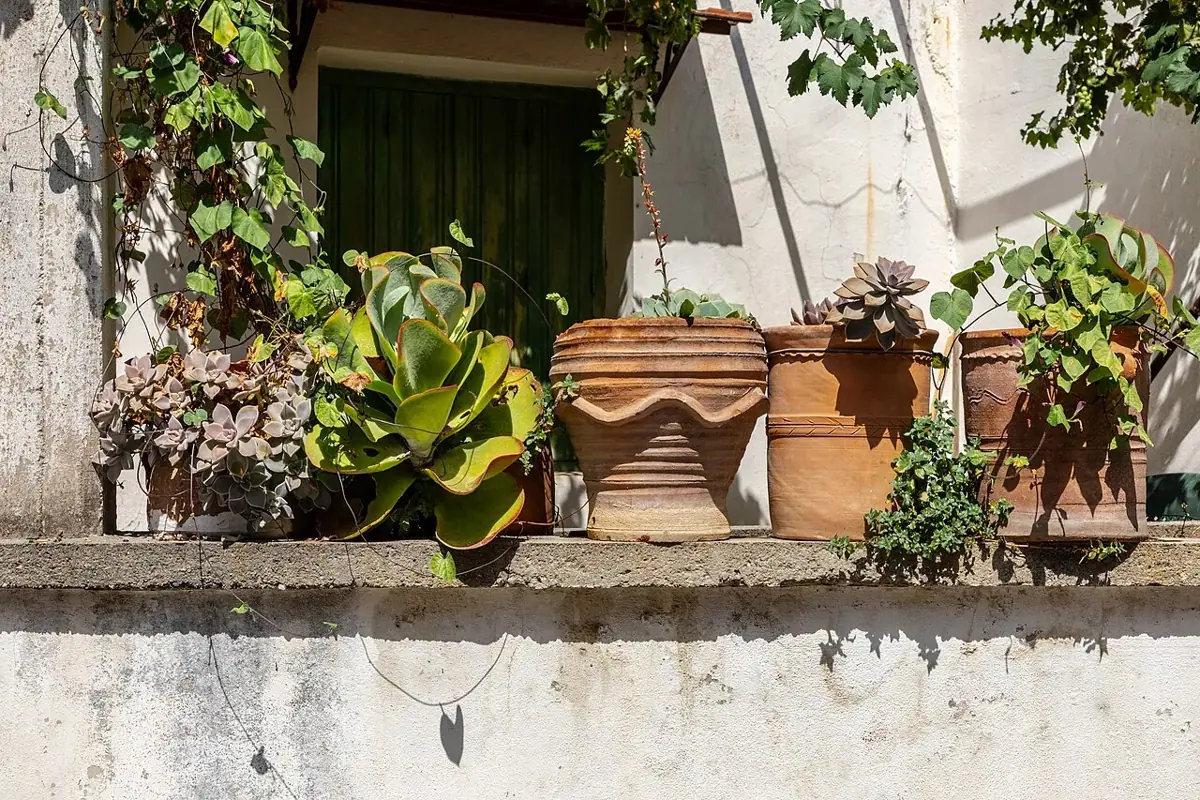
Move separate pots into provisional groups and watch them for a week or more under normal conditions. Check whether the same group consistently needs attention together. Do not assume adjacent pots dry at the same speed merely because their plants have similar requirements. One may contain far more roots or receive stronger reflected heat. Keep individual containers separate until the pattern is clear. Shared planters are harder to adjust, so they deserve a more careful compatibility check than a temporary arrangement of nursery pots.
Use the vessels to connect the display
A repeated material, colour or simple shape can make different plants look related. This allows you to maintain a sunny dry group and a shaded moist group without making either seem accidental. Vary container size where root needs require it, while repeating one visual detail. Leave enough space to inspect the back pots and lift them if necessary. An attractive arrangement loses its usefulness when the plant most likely to need attention is permanently hidden behind three heavier containers.
Reassess when conditions change
Seasonal light shifts, new growth and repotting can change the behaviour of a group. Record a quick note when one pot repeatedly becomes the exception. Move it rather than watering all its neighbours unnecessarily. In winter, plants that looked compatible outdoors may need different shelter. Take a photograph of each successful seasonal arrangement so it can be recreated. Grouping by care is an ongoing practical design method: the display becomes more coherent because the plants are thriving, and the routine becomes easier to understand.
A little further reading
Match these general notes to your plant variety, climate and local conditions.