Display the leaf pattern in useful light
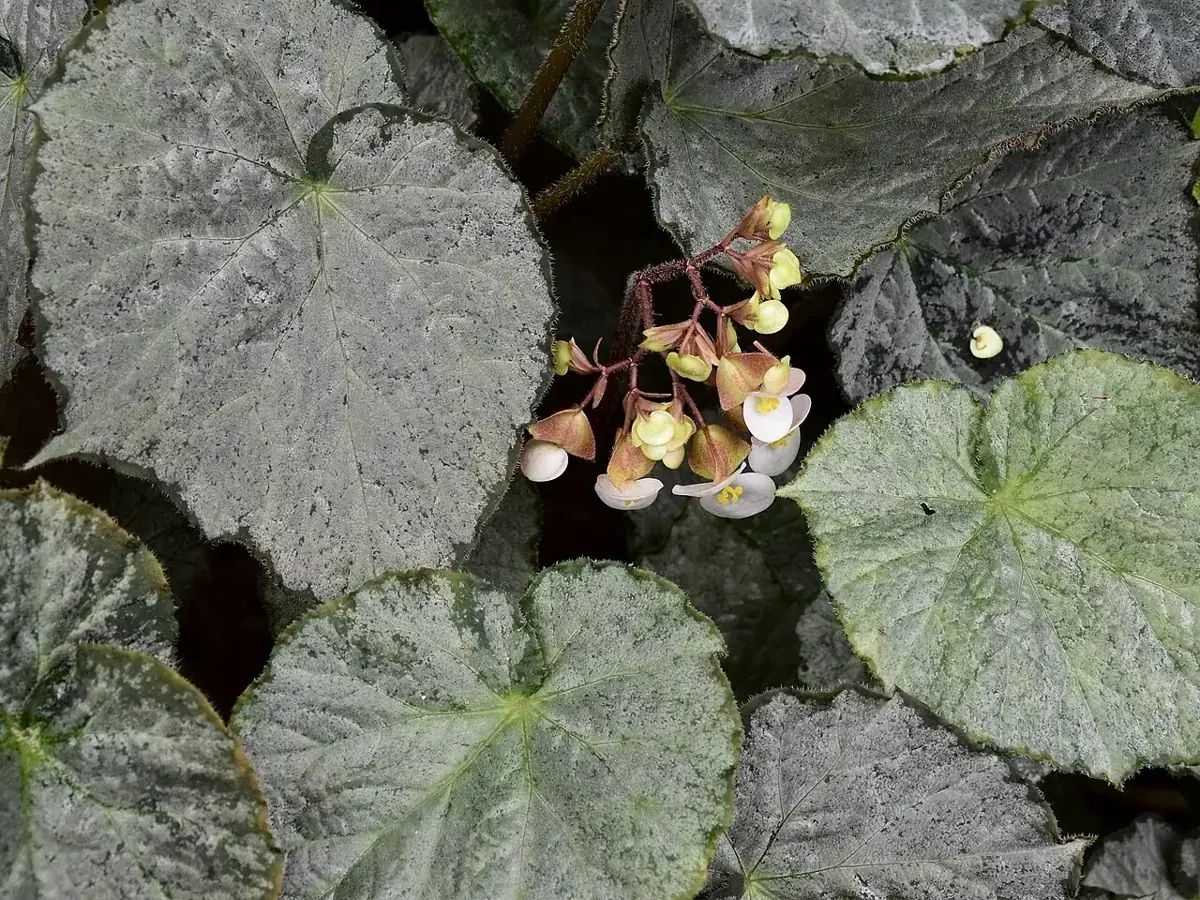
Rex-type begonias carry complex colours and textures that change with viewing angle. Place the plant in bright indirect light where the foliage can be appreciated without exposure to harsh sun. Check the actual light across the shelf rather than placing it wherever its colour matches the room. Leave enough space for leaves to expand without scraping a wall or window. A pale plain background often makes the pattern easier to see and makes new damage easier to notice.
Respect the rhizome at the surface
Many foliage begonias grow from a rhizome that creeps near the surface of the medium. When repotting, identify this structure and avoid burying it deeply under a fresh layer. Use an appropriate airy mix and a container suited to the root system rather than choosing a deep pot only for its appearance. Photograph the plant before repotting so its original orientation is clear. Position new growth where it has room to extend rather than immediately meeting the pot's edge.
Balance moisture with ventilation
Keep the medium suitably moist without leaving the pot standing in water. Water carefully around the plant instead of routinely soaking the foliage, and provide air circulation around the leaves. Higher humidity can be helpful, but a tightly closed damp environment can also encourage disease. Remove fallen or fully dead leaves before they become trapped against the crown. If a leaf develops spots, inspect the pattern and surrounding conditions rather than assuming all marks are a normal part of the ornamental colouring.
Edit the display as growth changes
Turn the pot modestly when needed for a balanced presentation, and note whether new leaves remain compact and well coloured. A plant may slow with seasonal changes, so avoid forcing it with extra water or feed during a quiet period. Keep a photograph of one mature leaf beside the whole plant to distinguish normal pattern from later damage. If several begonias share a shelf, leave gaps for inspection and watering. Their beauty depends on individual leaves being visible and healthy, not on packing the maximum number of pots into a humid corner.
A little further reading
Match these general notes to your plant variety, climate and local conditions.