Start with the plant's adult behaviour
A light annual climber and a large woody climber impose very different demands. Read the expected size, vigour and pruning requirements before selecting a trellis. Also check how the plant climbs: tendrils, twining stems and self-clinging roots do not use the same support in the same way. Keep the plant name in the design notes. Choosing a small decorative panel first and then asking a vigorous climber to remain permanently small can create an expensive maintenance problem.
Assess what carries the trellis
Inspect the wall, posts or frame to which the trellis will attach. The strength of the panel matters only if the fixings and supporting structure are also suitable. Allow for wet foliage and wind exposure, not just the weight of a young plant. Seek appropriate structural advice where loads or mounting conditions are uncertain. Leave enough separation for stems to grow and for inspection behind the support. Install the structure before planting so foundations and fixings can be completed without working through established roots.
Plan the route for new shoots
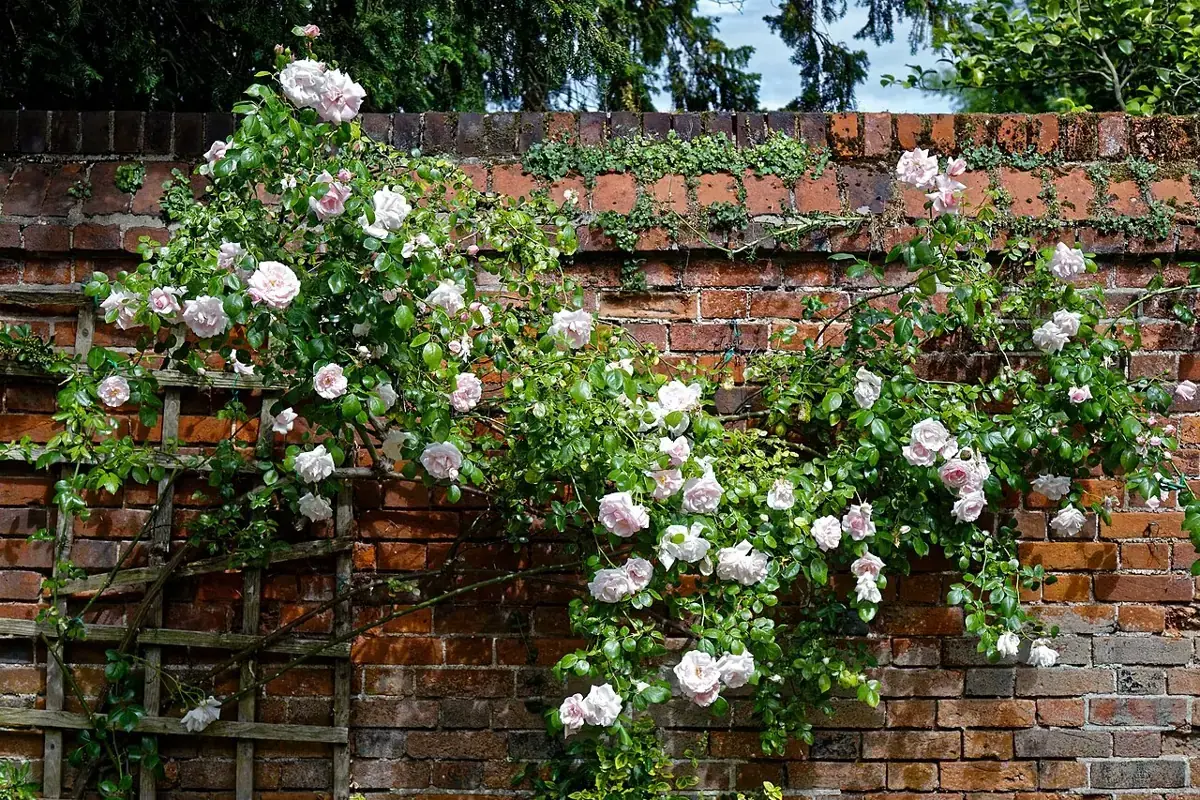
Place the plant where its roots have suitable conditions rather than directly against a dry wall simply because the trellis starts there. Lead early shoots toward the support with gentle, loose ties. Spread them according to the plant's training needs instead of allowing an immediate knot at one point. Check tie positions as stems thicken. The aim is a framework you can understand and maintain, so avoid crossing every shoot over another merely to cover bare wood as quickly as possible.
Keep the mature plant serviceable
Identify how you will reach the top, inspect fixings and remove old growth without unsafe climbing. Photograph the bare trellis before planting and retain the fixing details. Each dormant season or suitable maintenance period, inspect the load-bearing points that foliage usually hides. Replace worn ties and repair loose connections before spring growth adds weight. If the plant repeatedly exceeds the support despite appropriate pruning, reconsider the pairing. A trellis works best when its limits are acknowledged while the plant is still small enough to manage comfortably.
A little further reading
Match these general notes to your plant variety, climate and local conditions.