Start with a modest specimen
Choose a small flower or leaf from a plant you own, or collect with permission. Simple, relatively flat material is an easier first project than a dense double bloom. Wait until surface moisture has dried. Pick a specimen that shows the plant's character without taking the only flower from a small plant. Photograph it before pressing, especially if its colour is important to your page. Keep a temporary label with its name, collection date and location so several similar samples do not become mixed up.
Build an absorbent sandwich
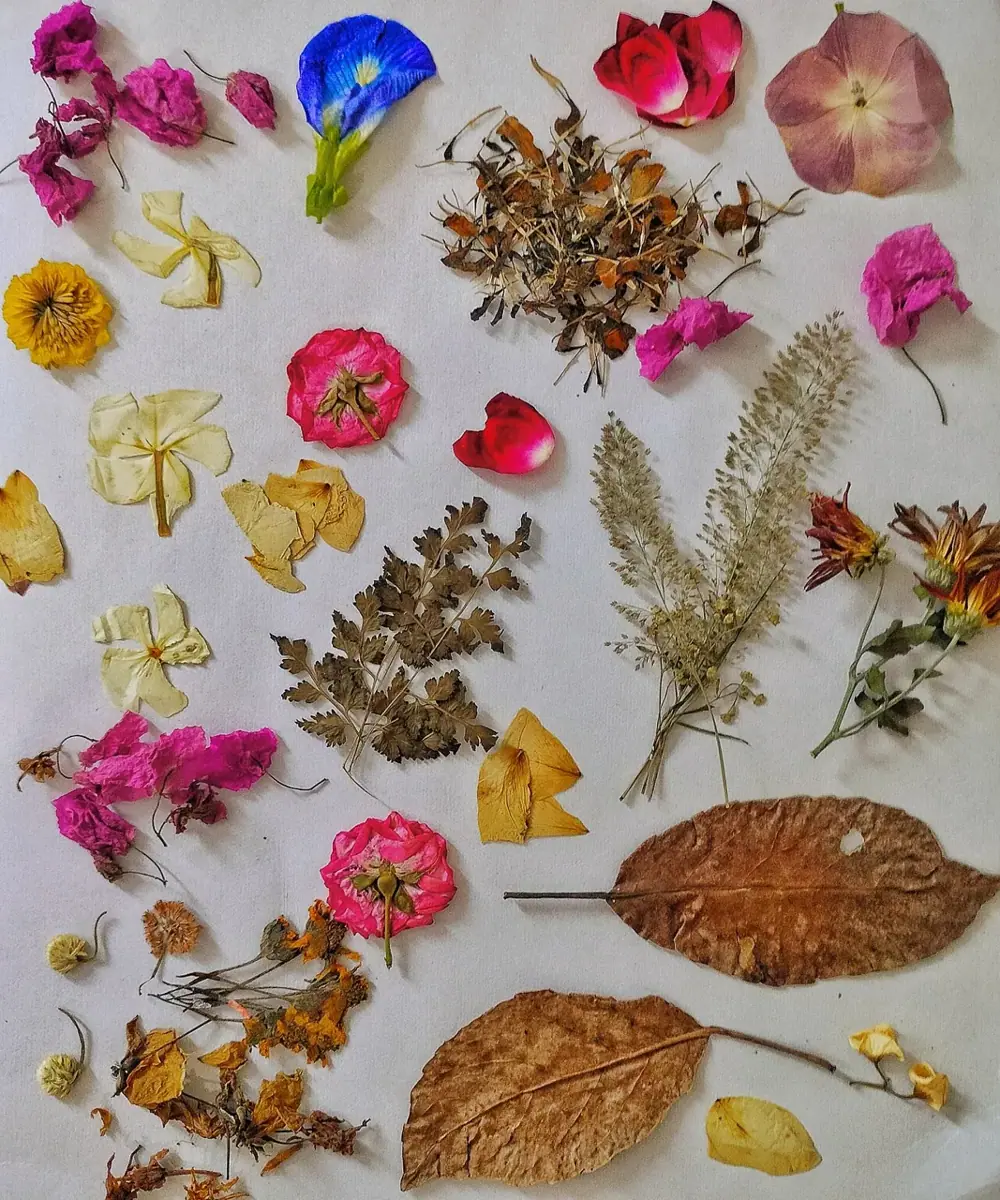
Lay the specimen between clean sheets of absorbent paper, supported by flat boards or heavy books. Protect valuable book pages with a separate pressing layer. Arrange petals and leaves before applying weight, leaving spaces where possible instead of piling everything into a thick lump. Several small specimens can share a sheet if they do not overlap. Put the stack in a dry place where it can remain undisturbed. Even pressure matters more than making an exceptionally heavy tower that is difficult to inspect.
Check the first day
Open the press carefully after about a day and replace damp drying layers with dry ones. This early inspection is also a chance to correct a folded petal while the material is still flexible. Support delicate pieces with a thin sheet of paper rather than pulling them by the stem. Continue checking until the specimen is thoroughly dry; the time varies with thickness and room conditions. If a sample becomes mouldy, discard it and improve the next attempt's dryness, spacing or ventilation.
Mount only when fully dry
Plan the page before applying adhesive. Leave space for a handwritten name and a short memory of where the plant grew. Use suitable paper and a small amount of an appropriate mounting adhesive or narrow paper tabs, avoiding a wet coating over the petals. Store the finished sheet flat and dry, away from strong sunlight. Photographing the completed page gives you a backup if a fragile petal later breaks. A well-labelled, slightly imperfect specimen is often more meaningful than an anonymous, immaculate arrangement.
A little further reading
Match these general notes to your plant variety, climate and local conditions.