Look without reaching overhead
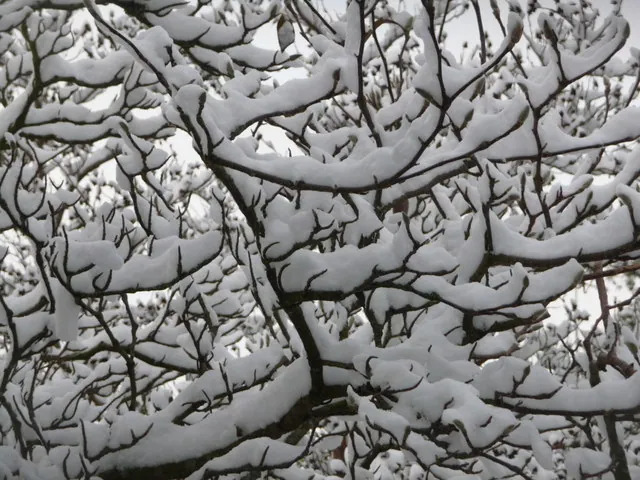
Begin at a safe distance. Note whether snow is resting on flexible stems, a dense evergreen canopy or an already damaged branch. Avoid standing beneath heavy accumulations or climbing to reach them. A garden ladder and slippery ground are a poor combination. Structural tree damage belongs with an appropriately qualified professional. For small shrubs within easy reach, distinguish a branch that is merely bent from one that has cracked or separated at its attachment.
Do not strike frozen growth
Cold stems can be brittle. Shaking, beating or pulling them upright may cause the damage you hoped to prevent. If loose snow can be gently eased away from a reachable shrub without forcing its branches, work carefully and stop when conditions make that impractical. Leave ice attached rather than chipping it from living tissue. A branch held down by ice may need time to thaw naturally. The urgency of making a plant look normal is not a measure of what it needs.
Keep surrounding maintenance gentle
Avoid piling cleared snow onto planted beds or against shrubs. Snow moved from treated paths may bring de-icing residues into the root area, so choose a suitable storage place when clearing access. Keep people from stepping on hidden crowns and low plants. Mark the edge of a bed if it is difficult to see. The most useful action may be protecting the area from further compression while the original snowfall remains undisturbed.
Assess after the thaw
When the load has gone and the plant can be inspected properly, look for cracks, torn bark and branches that remain displaced. Use plant-specific pruning guidance for manageable damage, and seek qualified help for substantial limbs. Photograph the plant before and after the event. If a particular shrub repeatedly collects damaging loads, consider its structure and position when planning future maintenance. Avoid tying every branch tightly together as a universal solution; support should suit the plant rather than conceal its condition.
A little further reading
Match these general notes to your plant variety, climate and local conditions.