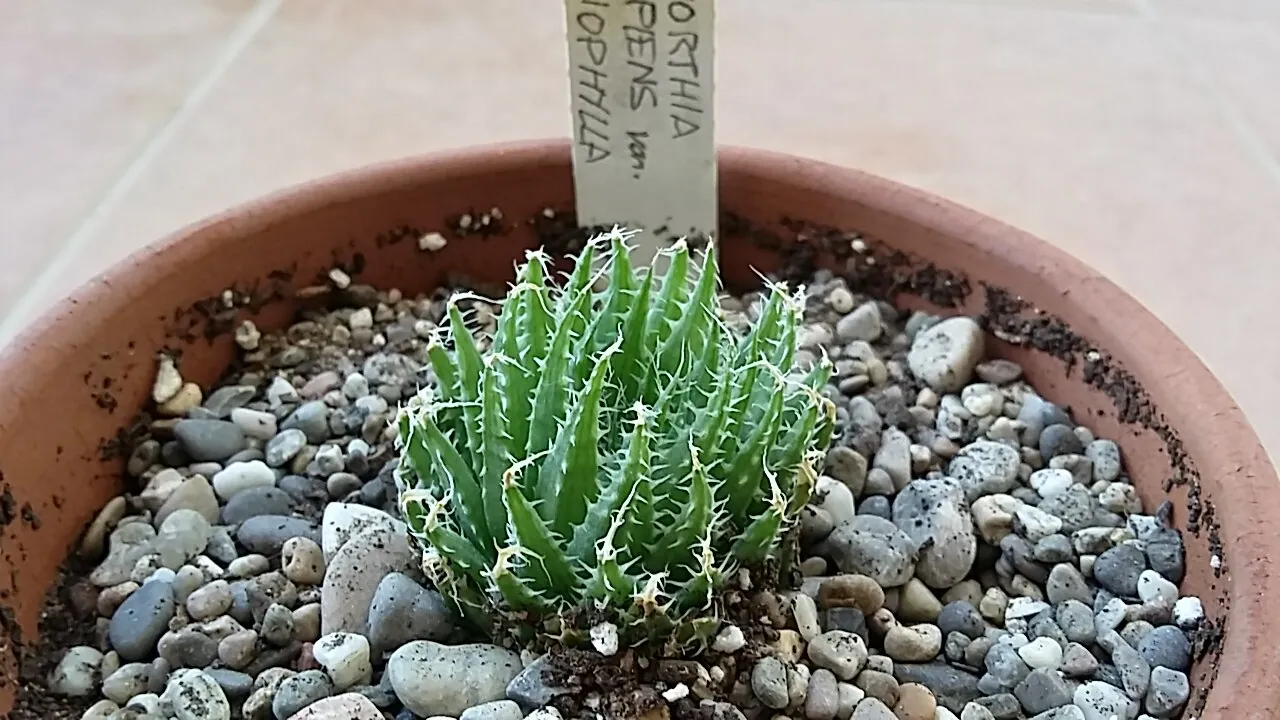
Identify the rosette on the label
Plants sold as haworthias include species now placed in Haworthiopsis and Tulista, as well as true Haworthia. Their textures range from translucent windowed tips to firm striped leaves. Keep the label and consult care for the actual plant rather than assuming all small striped succulents are identical. Photograph the rosette from above when it arrives. This gives a useful reference for its compact shape before changes in your home influence the new growth.
Test the shelf rather than the room
A shelf can look bright while its rear corner receives little direct view of the window. Put the plant toward a suitable bright position and observe whether upper shelves cast shade. Avoid an abrupt move from a dim shop display into intense direct sun. Gradual acclimatisation is safer and lets you observe changes in colour and firmness. If a rosette stretches, new growth is the part that can improve; an elongated older section will not instantly compress back into its former shape.
Let the container drain fully
Choose a pot with drainage and a suitable freely draining medium. Allow appropriate drying between waterings, adapting to the species and season rather than using one tiny weekly dose. Lift the pot from any decorative holder to check for trapped water. Avoid a sealed glass arrangement where moisture is difficult to judge and drainage is absent. A thin ornamental surface dressing can also hide wet medium, so keep at least one accessible spot where the condition below can be checked.
Keep the collection readable
If several small succulents share the shelf, label them individually and leave room to remove each pot without damaging neighbouring leaves. Inspect leaf bases and roots if the plant becomes soft or unstable. Offsets do not need to be separated immediately; a balanced clump can be attractive if the pot remains suitable. Compare monthly overhead photographs and note whether the rosette stays firm and proportionate. A modest shelf collection is easier to maintain when each plant's drying pattern remains visible instead of being lost inside a crowded decorative arrangement.
A little further reading
Match these general notes to your plant variety, climate and local conditions.