Open the collection one clump at a time
Prepare a clean tray, labels and space for healthy material before unpacking stored tubers. Keep each variety with its own label throughout the inspection. A pile of similar-looking tubers is difficult to identify later. Note the storage conditions and whether the surrounding material feels unusually wet or dry. Compare several clumps before changing the whole storage setup; one damaged piece does not necessarily describe the condition of everything in the box.
Inspect connections as well as bodies
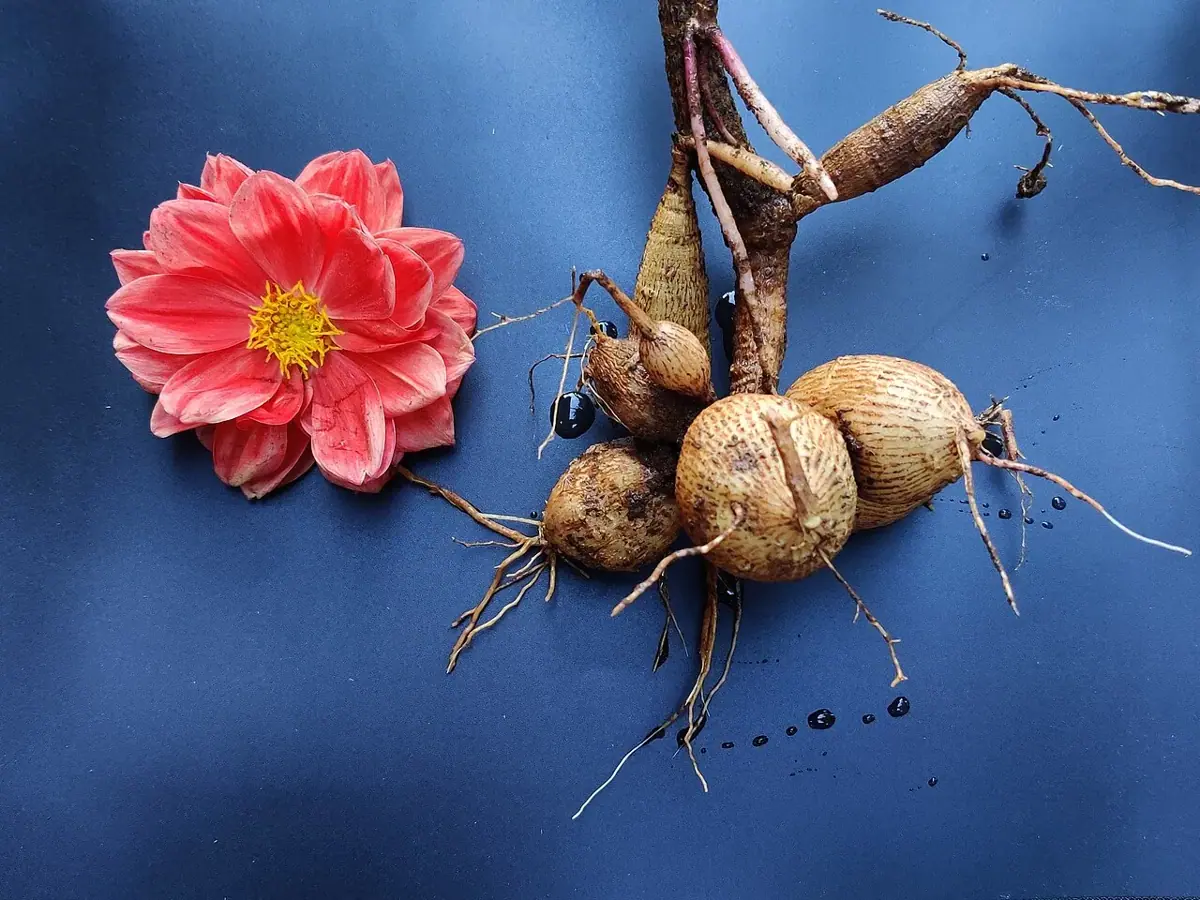
Look for firm tissue, obvious decay, severe shrivelling and broken necks. The fleshy part is not the whole future plant: a viable division needs a suitable connection to crown tissue with a growing point. Do not assume a large detached tuber will produce a shoot merely because it looks substantial. Handle clumps gently and seek a clear botanical guide before dividing an unfamiliar one. When the eyes are difficult to locate, patience can be more useful than an early confident cut.
Keep questionable material separate
Remove material that is clearly decayed from contact with healthy clumps, and clean tools between jobs. If you are unsure whether a mark is superficial or spreading, isolate the clump and observe it rather than repacking it tightly among others. Avoid treating every wrinkle with prolonged soaking. Storage methods and the stage of growth matter, and excessive wetness can create another problem. Write down what you found so that a later inspection can reveal whether the condition is changing.
Start growth when the next space is ready
Before potting tubers, decide where shoots will receive suitable light and protection from cold. Starting a large collection too early creates plants that need more space than the original boxes. Label pots immediately and follow dahlia-specific advice for starting and later planting outdoors. Check local frost risk rather than using a photograph of another garden as a timetable. Retain a short note about storage losses; it will help you improve temperature, moisture and handling next winter.
A little further reading
Match these general notes to your plant variety, climate and local conditions.